
Welding is everywhere around us, though many people hardly notice it. From tall skyscrapers to your car’s frame, from oil pipelines under the ground to bridges over rivers, welding is the invisible force holding our modern world together. But what is welding, really?
How does it work, and why is it so important for construction, manufacturing, and even art? If you want a clear, in-depth understanding of welding, you’ve come to the right place.
In this article, you’ll learn not just the basic idea, but also the different methods, history, applications, safety, and future of welding. Even if you’re completely new to the topic, you’ll find practical explanations and useful examples to help you see why welding is a skill worth knowing about.
The Basic Concept Of Welding
At its core, welding is a process of joining two or more pieces of metal (or sometimes plastic) together by using heat, pressure, or both. Unlike gluing or fastening with bolts, welding creates a very strong bond—sometimes even stronger than the original materials.
Welding usually involves melting the edges of the parts that need to be joined. The melted materials flow together and, as they cool, they solidify into a single piece. Sometimes, a filler material (a metal rod or wire) is added to help form the joint and make it even stronger.
There are many ways to create this heat or pressure, and each method has its own advantages. But all welding processes share a common goal: to make a permanent, reliable connection between materials.
Welded joints are often so strong and seamless that, when done well, the connection is hard to spot unless you know where to look. This invisibility is a big reason why welding is so essential—structures can be both strong and aesthetically pleasing.
Why Welding Matters
Welding is not just one skill or tool—it’s a key part of countless industries. Bridges, ships, cars, trains, and airplanes all depend on welded joints. Without welding, modern infrastructure and technology would look very different.
Welding is also important for repairs. For example, a damaged tractor in a rural area can be fixed on-site using portable welding tools. Artists and sculptors use welding to shape metal into creative forms. The field is wide, and the possibilities are endless.
For example, without welding, building a ship’s hull or a skyscraper’s frame would be almost impossible. Bolts or rivets alone can’t provide the same strength or airtight seal that welding can. In addition, welding allows for quick repairs in remote areas—farmers, miners, or military engineers can carry simple welding kits to fix equipment and keep operations running.
Another area where welding is crucial is in pipelines. Oil, gas, and water are transported long distances through welded pipes. The joints must be strong and leak-proof, or disasters can happen. Welding makes this possible.
Key Differences: Welding Vs. Other Joining Methods
It’s easy to confuse welding with other joining techniques, like soldering or brazing. While all these methods join materials, welding usually means melting the base material itself. Soldering and brazing, on the other hand, use a filler that melts at a lower temperature than the base materials. This makes welding stronger and suitable for heavy-duty applications.
Another difference is that welding creates a permanent joint—once welded, the parts cannot be separated without cutting or breaking them. Soldered or bolted joints, however, can be taken apart if needed. This is why welding is chosen for applications where strength and permanence are required, such as in bridges, buildings, and vehicles.
A Brief History Of Welding
Welding is not a modern invention; it has a long story that stretches back thousands of years. Early blacksmiths used basic forms of welding to create tools, weapons, and art.
Ancient Beginnings
The earliest forms of welding, known as forge welding, began around 3000 BCE. Blacksmiths would heat metal pieces in a fire and then hammer them together until they fused. This technique was used to make swords, knives, and horseshoes.
Ancient Egyptians and Greeks also used welding-like techniques. For example, gold boxes found in Egyptian tombs were made by hammering and heating metal to join edges. This early work required great skill, as there were no modern machines or electricity.
Some artifacts, like the Iron Pillar of Delhi in India (built around 400 CE), show advanced welding skills for their time. Craftsmen used heat and hammering to weld large iron pieces into a single, rust-resistant structure that still stands today.
Industrial Revolution And Electric Welding
The 19th century brought big changes. In the 1800s, scientists discovered how to use electricity to generate heat for welding. In 1881, Auguste de Méritens developed the first arc welding process using carbon electrodes. Later, in 1885, Nikolai Benardos and Stanisław Olszewski received a patent for a similar process.
By the early 1900s, arc welding and oxy-fuel welding (using a flame from burning gases) became more common. These methods allowed for faster and stronger joints, which helped build ships, railroads, and skyscrapers.
Welding played a major role in both World Wars. Factories needed fast, strong ways to build tanks, ships, and airplanes. Traditional riveting could not keep up with the demand. Welding allowed mass production and changed manufacturing forever.
Modern Advances
The 20th and 21st centuries have seen rapid growth in welding technology. Today, robots perform precise welds in car factories. New methods like laser welding and ultrasonic welding allow for complex and delicate work, such as in electronics and medical devices.
Computers now control many welding processes, adjusting temperature, speed, and other factors in real time. Materials science has also advanced, allowing the joining of metals that were once thought impossible to weld. For example, modern trains and airplanes often use lightweight aluminum alloys that require special welding methods.
Welding is not limited to Earth. NASA has developed welding techniques for use in space, such as electron beam welding in vacuum, which is essential for building and repairing spacecraft.
How Welding Works: The Science Behind The Spark
Welding might seem like just “melting metal together,” but there’s more to it. Understanding the science makes it easier to appreciate why different welding methods exist.
The Role Of Heat And Pressure
Most welding processes work by heating the metals to their melting point. When the edges melt, they mix together. If a filler material is added, it melts too and becomes part of the joint. As the melted area cools, it forms a solid, often stronger than the original pieces.
Some methods, like resistance welding, use both heat (from electrical resistance) and pressure to join the materials. The amount of heat and pressure used must be carefully controlled. Too much heat can burn through the material or make the joint brittle. Too little heat or pressure can lead to a weak, incomplete weld.
For example, in friction welding, two parts are rubbed together at high speed. The friction creates enough heat to soften the metals, and then pressure is used to forge them together. This method is used to join axle shafts in cars or connect pipes in oil rigs.
The Importance Of Shielding
When metal is molten, it can react with the air. Oxygen and nitrogen in the atmosphere can cause the weld to become weak or brittle. To prevent this, many welding methods use a shielding gas (like argon or carbon dioxide) or a special coating (called flux) to protect the weld from contamination.
For example, in MIG welding, a flow of argon or CO₂ gas covers the weld pool, pushing away air and keeping the joint pure. In stick welding, the flux coating on the electrode melts and creates a protective gas and slag over the weld.
If shielding is poor—perhaps because of wind or a faulty gas nozzle—the weld can become porous or cracked. This is why indoor welding or using wind shields is important for some jobs.
Types Of Weld Joints
The way two pieces of metal are joined is called a weld joint. The five main types are:
- Butt Joint – Two pieces are in the same plane and joined at their edges.
- Corner Joint – Pieces meet in the shape of an “L.”
- T-Joint – One piece is joined at the middle of another, forming a “T.”
- Lap Joint – Pieces overlap each other and are welded together.
- Edge Joint – Edges of two or more pieces are placed side by side and joined.
Each joint type is chosen based on the design, strength needed, and accessibility.
For example, butt joints are common in pipelines, while corner joints are used in frames and boxes. Lap joints are often found in sheet metal work, such as car bodies. The shape and accessibility of the joint affect the choice of welding process and the welder’s skill.
Main Types Of Welding Processes
Welding is not a single technique. Over time, many methods have been developed to suit different needs. Here are the most important types:
1. Arc Welding
Arc welding uses an electric arc (a bright, hot spark) to melt the metal. It’s one of the most common forms, and includes several variations:
Shielded Metal Arc Welding (smaw)
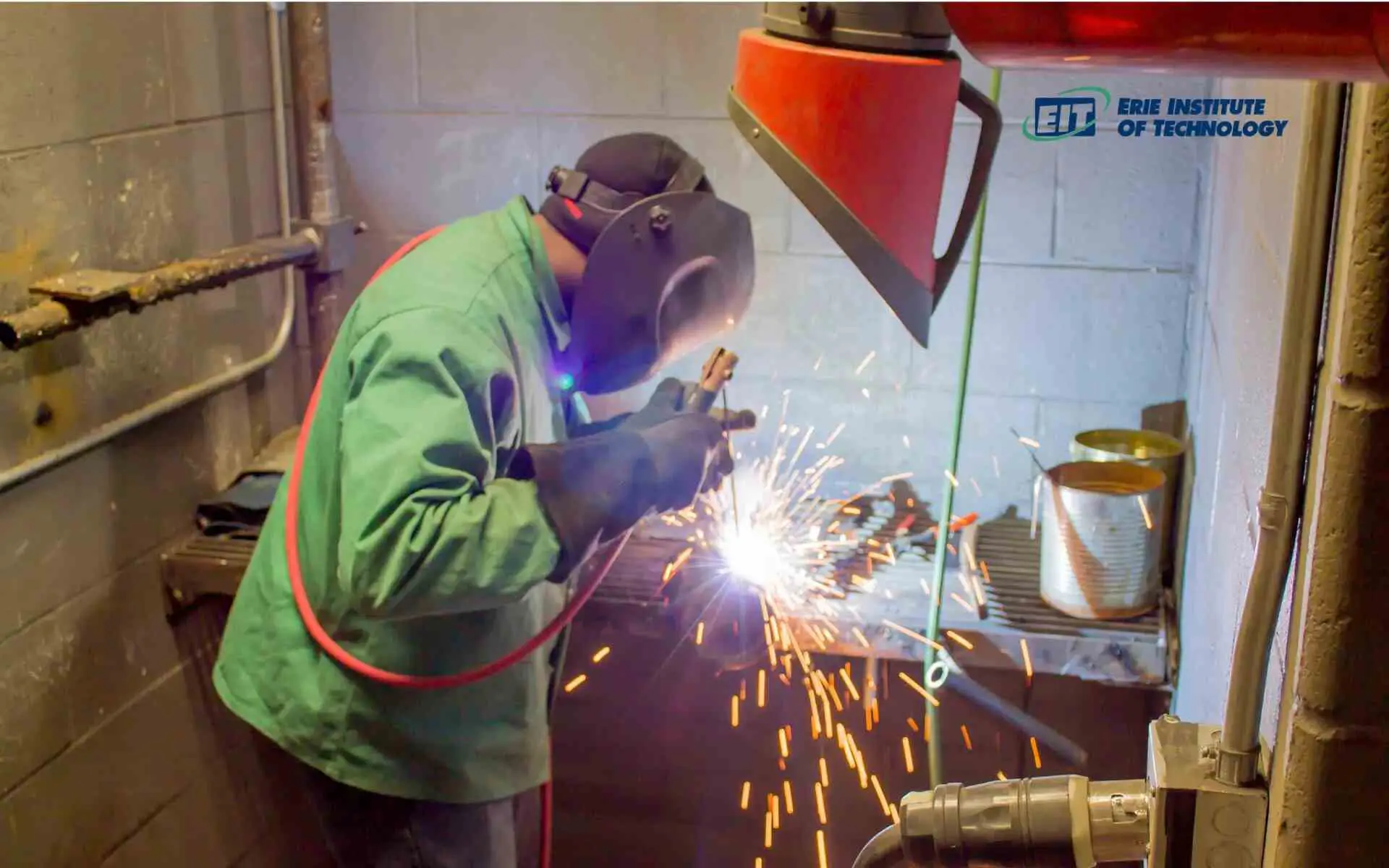
Known as stick welding, SMAW uses a coated metal rod (electrode). The rod creates the arc and also supplies a flux that protects the weld. It’s simple, portable, and works well outdoors.
Stick welding can be used even in windy or dirty environments. It’s great for repairs on farms, construction sites, or pipelines. The main challenge is that stick welding can produce a lot of smoke and requires skill to control the arc length and angle.
Gas Metal Arc Welding (gmaw) / Mig Welding
Often called MIG welding (Metal Inert Gas), this method uses a wire fed through a gun and a shielding gas. It’s fast, clean, and widely used in car factories and workshops.
MIG welding is popular with beginners because it’s easy to start and produces neat welds. The wire feed is continuous, so you don’t need to stop and change electrodes often. However, MIG welding is sensitive to wind, so it’s usually done indoors or with wind protection.
Gas Tungsten Arc Welding (gtaw) / Tig Welding
TIG welding (Tungsten Inert Gas) uses a non-consumable tungsten electrode and a separate filler rod. The result is a very precise, clean weld, often used for aluminum, stainless steel, and delicate jobs.
TIG welding gives the welder full control over heat and filler material. It’s the preferred method for thin metals, bicycle frames, and artistic work. The process requires both hands—one for the torch and one for the filler rod—so it takes practice to master.
Flux-cored Arc Welding (fcaw)
Similar to MIG, but the wire has a core of flux, so it can be used outdoors without extra shielding gas. It’s good for thicker materials and high-speed work.
FCAW is often used in shipbuilding and construction. The flux in the wire creates slag, which must be chipped off after welding. The process is fast and powerful, but the slag must be removed to check weld quality.
2. Oxy-fuel Welding
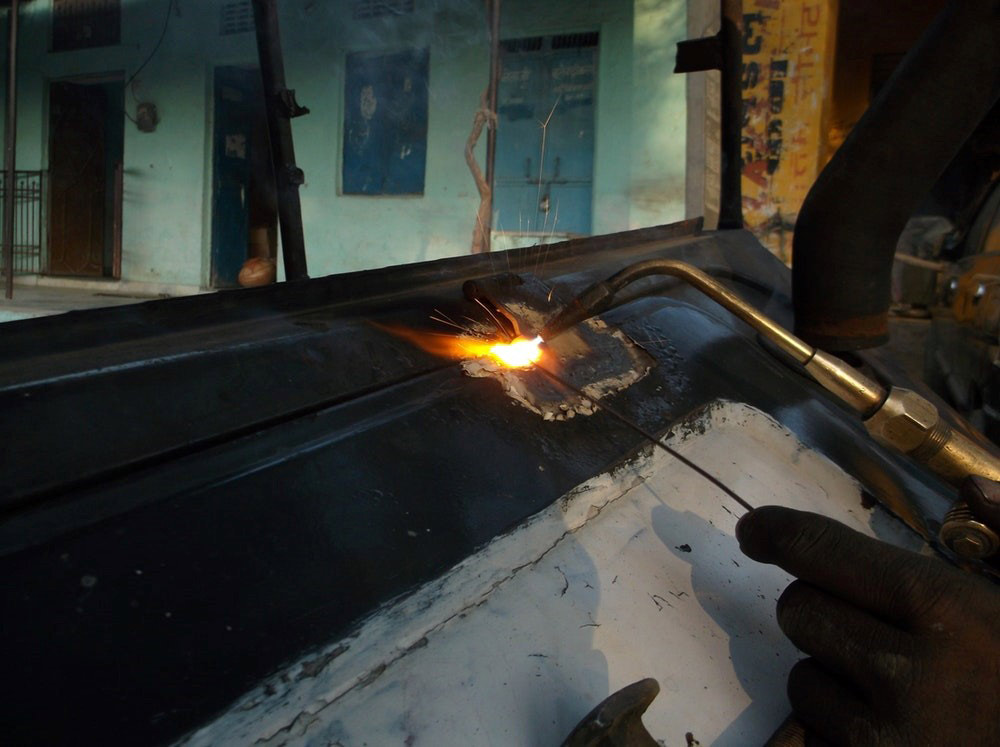
Also known as gas welding, this method uses a flame from burning a fuel gas (like acetylene) mixed with oxygen. The flame melts the edges of the metals and a filler rod may be added. Oxy-fuel welding is often used for repair work and cutting metals.
Oxy-fuel welding is very flexible—you can adjust the flame for different metals and thicknesses. It’s also used for cutting steel by melting a narrow line with the flame and blowing away the molten metal with a jet of oxygen.
3. Resistance Welding
In resistance welding, two metal pieces are pressed together and an electric current is passed through them. The resistance creates heat, which fuses the parts.
- Spot welding is a common example, used to join thin sheets in car bodies and appliances.
Resistance welding is fast and can join many pieces at once. It’s often automated and used in mass production. However, it works best with thin metals and is less suitable for thick or irregular pieces.
4. Energy Beam Welding
These advanced methods use focused beams of energy to melt the materials:
- Laser Beam Welding – Uses a powerful laser to create narrow, deep welds. Used in electronics, automotive, and aerospace.
- Electron Beam Welding – Uses a beam of electrons in a vacuum. It’s highly precise and used for critical applications.
Energy beam welding can join metals without much heat spreading to the surrounding area, reducing distortion. The equipment is expensive and requires clean, controlled environments.
5. Solid-state Welding
Not all welding involves melting. In solid-state welding, pressure and sometimes heat are used, but the base metals don’t melt:
- Friction Welding – The pieces are rubbed together at high speed, creating heat through friction.
- Ultrasonic Welding – High-frequency vibrations are applied, mostly for plastics and thin metals.
Solid-state welding is used when melting the metals would cause problems, such as changing their properties or causing defects.
6. Other Methods
Some specialized techniques include:
- Thermite Welding – Uses a chemical reaction to produce intense heat. Often used to weld railway tracks.
- Explosion Welding – Uses controlled explosions to join large plates or tubes, especially when different metals are involved.
These methods are less common but essential for special tasks—such as joining dissimilar metals or making very large welds in difficult locations.
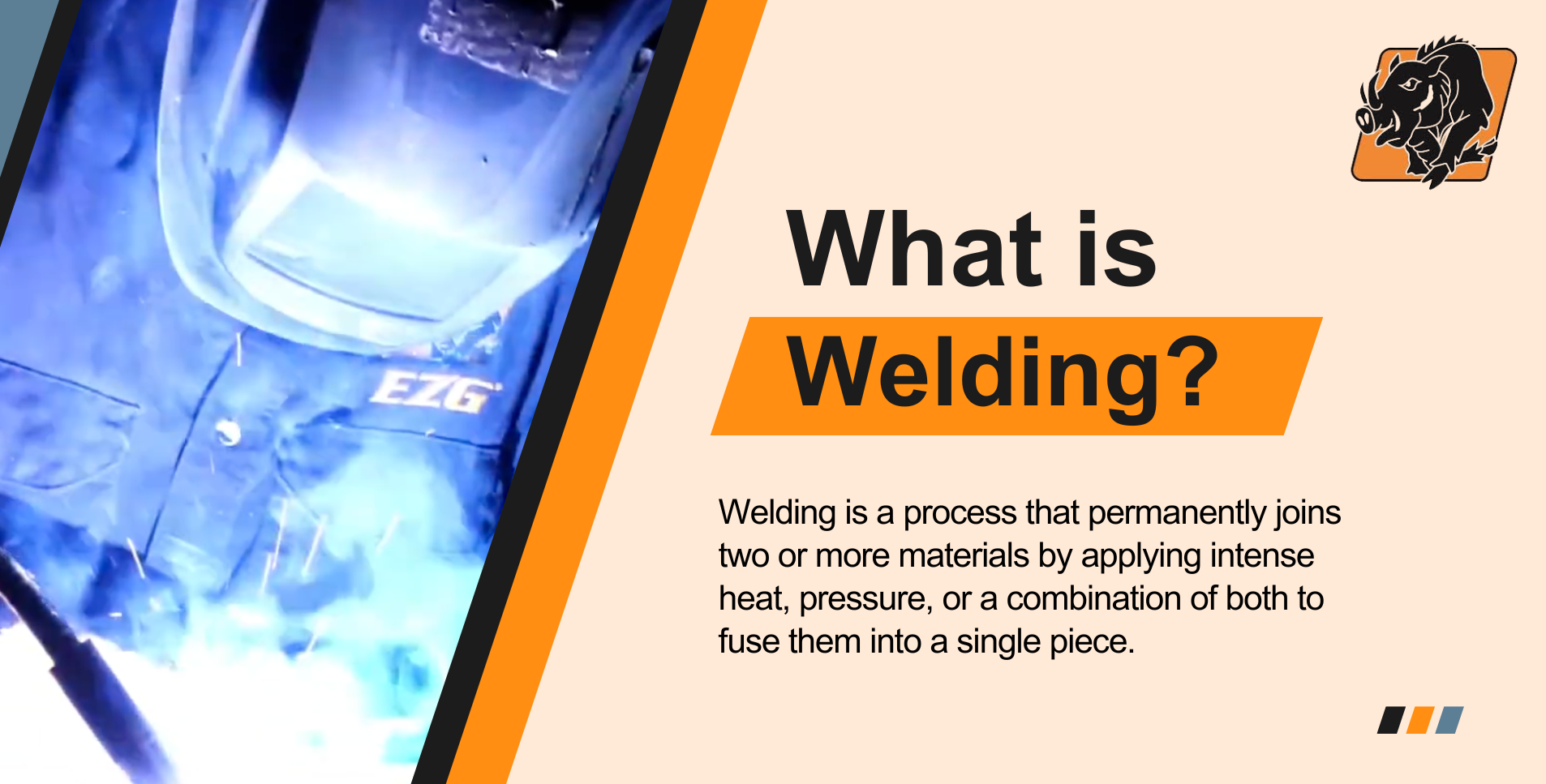
Credit: ezgmfg.com
Common Welding Materials
Welding is most often used for metals, but not all metals behave the same way. Here are the main materials you’ll find in welding:
Steel
Steel is the most widely welded material. Mild steel is easy to weld and cheap, making it popular for construction and vehicles. Stainless steel requires more skill but resists rust and is used in food, medical, and chemical industries.
Welding stainless steel needs precise temperature control and the right filler metals to prevent corrosion at the joint. Special shielding gases may also be used to protect the weld.
Aluminum
Aluminum is light and resists corrosion, but it’s more challenging to weld because it conducts heat quickly. TIG and MIG welding are common choices for aluminum.
Extra care must be taken to clean aluminum surfaces before welding, as even a thin layer of oxide can prevent proper joining. Preheating thicker pieces helps create better welds.
Cast Iron
Cast iron is hard but brittle. Welding requires special rods and careful heating and cooling to avoid cracks.
Often, preheating the cast iron before welding and letting it cool slowly can help prevent cracks. Nickel-based filler rods are commonly used.
Copper And Alloys
Copper conducts heat and electricity very well. It’s used in electrical parts, pipes, and artistic work. Its alloys, like bronze and brass, are also welded for decorative and engineering uses.
Welding copper requires high heat and sometimes special fluxes to prevent oxidation. The high thermal conductivity can make it difficult to keep the weld pool hot enough.
Plastics
Not all welding is for metals. Plastic welding uses heat or ultrasonic energy to join pipes, tanks, and packaging.
Common methods for plastics include hot air welding, extrusion welding, and ultrasonic welding. These are important in plumbing, packaging, and automotive industries.
Non-obvious Insight: Metal Cleanliness
One detail beginners often miss is that surface cleanliness is critical. Dirt, oil, paint, or rust can weaken a weld. For high-quality results, surfaces must be cleaned with a wire brush, grinder, or chemical cleaner before welding.
Even fingerprints can leave oils that cause weld defects. In industries like aerospace, strict cleaning protocols are followed before every weld.
Welding Positions
Welding is not always done in the same position. The orientation of the work affects the difficulty and the technique:
- Flat Position (1G/1F) – The workpiece is flat. It’s the easiest position.
- Horizontal Position (2G/2F) – Weld is made on the side of a horizontal surface.
- Vertical Position (3G/3F) – The weld runs up or down a vertical surface.
- Overhead Position (4G/4F) – Welding is done from below the joint, overhead.
Learning to weld in all positions is essential for professional welders, especially in construction and pipeline work.
For example, welding a pipe on a ceiling requires working overhead, which is physically demanding and requires excellent control to prevent molten metal from falling. Welding vertical joints can be tricky because gravity pulls the molten metal down, so special techniques (like welding uphill or downhill) are used.
Welders often train with test pieces in all positions and must pass practical exams to be certified for certain types of work, such as pressure vessel or pipeline welding.
Equipment And Tools In Welding
Welding requires more than just skill. The right equipment makes a big difference in safety and quality.
Welding Machines
The type of machine depends on the method:
- Arc welders (stick, MIG, TIG)
- Oxy-acetylene torches (for gas welding and cutting)
- Spot welders (for resistance welding)
- Laser or ultrasonic machines (for precision work)
Each machine has its own controls, settings, and power requirements. Modern arc welders may have digital displays for voltage, current, and even memory for custom settings.
Accessories
- Electrodes or filler rods – Provide extra material for the weld.
- Shielding gas tanks – For MIG and TIG welding.
- Clamps and fixtures – Hold pieces in place.
- Chipping hammers and wire brushes – Remove slag and clean the joint.
Other accessories include ground clamps, welding tables, and foot pedals (for TIG welding). Good lighting and ventilation fans are also important in a welding shop.
Personal Protective Equipment (ppe)
Welding is dangerous without proper protection:
- Welding helmet – Protects eyes and face from bright light and sparks.
- Gloves – Heat-resistant, to protect hands.
- Apron or jacket – Leather or flame-resistant fabric.
- Boots – Prevent burns from falling sparks.
- Respirator – For work in confined spaces or with toxic fumes.
PPE is not just for the welder—anyone nearby should also wear eye protection to avoid accidental exposure to the welding arc, which can cause temporary or permanent eye injury.
Non-obvious Insight: Tool Maintenance
A clean, well-maintained welding machine and accessories lead to better welds. Damaged cables, dirty contact tips, or worn-out helmets can cause accidents or poor-quality work.
For example, a dirty gas nozzle can block shielding gas, causing porosity in welds. Regular inspection and replacement of worn parts prevent costly mistakes and injuries.
Welding Safety
Welding can be dangerous if not done properly. Heat, sparks, fumes, and bright light are all risks.
Main Hazards
- Burns – Hot metal and sparks can cause serious injuries.
- Electric shock – Especially in arc welding.
- Eye damage – The intense light can cause “arc eye” (painful burns to the eyes).
- Fumes and gases – Breathing in welding fumes can lead to lung problems or poisoning.
- Fire – Sparks can ignite nearby materials.
Even a small spark can set fire to clothing, paper, or chemicals. Proper housekeeping and fire safety are a must in any welding area.
Safe Practices
- Always wear proper PPE (helmet, gloves, etc. ).
- Make sure the area is clear of flammable materials.
- Keep a fire extinguisher nearby.
- Use proper ventilation or a respirator.
- Check equipment before use.
- Never weld in wet or damp conditions to avoid electric shock.
It’s also important to let others know when welding is happening. Signs or curtains can protect people nearby from accidental exposure to the arc.
Special Precautions
Some materials, like galvanized steel, release toxic fumes when welded. Always check the type of metal and use extra protection or avoid welding if unsure.
For example, welding on painted or coated surfaces can release lead or other poisons. In confined spaces, such as tanks or ship holds, extra ventilation or air-supplied respirators are required.
Applications Of Welding
Welding is a universal skill with applications in almost every industry. Here are some key areas:
Construction
Bridges, buildings, stadiums, and towers all rely on welded steel frames. Welding allows for strong, flexible designs that can withstand earthquakes and heavy loads.
Welded joints are often inspected using X-rays or ultrasonic testing to ensure they meet safety standards.
Automotive And Transportation
From cars and trucks to trains and ships, welding is used to assemble frames, bodies, and critical parts. Spot welding and robotic MIG welding are common in car factories.
Modern car bodies often use hundreds of spot welds, created in seconds by automated machines. This makes production faster and cheaper.
Aerospace
Aircraft and spacecraft require lightweight but strong structures. TIG, laser, and electron beam welding are used to join thin aluminum and titanium parts.
Special welds are required to handle temperature changes and high stresses during flight. In space, unique welding methods are used, as traditional flames or arcs don’t work in a vacuum.
Oil And Gas
Pipelines, storage tanks, and drilling equipment all depend on high-quality welds. Pipeline welding often happens in tough conditions, requiring special techniques.
Pipeline welders must often work outdoors, in extreme temperatures, and sometimes under water or in hazardous environments. Every weld is inspected to prevent leaks.
Manufacturing
From household appliances to industrial machines, welding is essential for assembling parts quickly and accurately.
Robots are often used for repetitive welds, improving consistency and quality. In smaller shops, skilled welders build custom machines, repair equipment, or create prototypes.
Art And Sculpture
Artists use welding to create large metal sculptures, furniture, and decorative pieces. The process allows for creativity and strength in designs.
Welding enables the creation of public art installations, custom furniture, or even jewelry. Artists experiment with different metals, textures, and shapes.
Repair And Maintenance
Broken parts, farm equipment, or machinery can be repaired on-site with portable welding machines, saving time and money.
For example, a broken excavator bucket can be re-welded in the field, avoiding the need to ship it to a workshop.
Energy And Infrastructure
Power plants, wind turbines, and solar panels all involve welded connections for reliability and safety.
In wind farms, tower sections are welded together to create strong, tall structures that can withstand high winds.
Welding In Modern Technology
Welding technology is always evolving. Here are some ways it’s shaping the future:
Automation And Robotics
Many factories use robotic welders for precise, high-speed work. Robots improve consistency and reduce human exposure to hazards.
Robots can work 24/7, never get tired, and repeat the same welds perfectly. Human welders are still needed for setup, maintenance, and complex jobs.
Advanced Materials
New alloys and composites require special welding methods. For example, aerospace companies use friction stir welding for lightweight aluminum-lithium alloys.
Some materials, like titanium or magnesium, are reactive and need special shielding gases or controlled environments.
3d Printing (additive Manufacturing)
Some 3D printing methods use welding principles, building parts layer by layer from metal powder or wire.
Laser or electron beam melting joins each layer, creating complex shapes that would be hard to make with traditional methods.
Smart Welding Systems
Modern machines have sensors and computers to adjust welding parameters in real time, improving quality and reducing waste.
Some systems can detect defects as they happen and make corrections automatically, ensuring strong, consistent joints.
Environmental Concerns
New welding processes aim to reduce fumes, energy use, and waste. For example, cold metal transfer (CMT) welding uses less heat, making it greener.
Manufacturers are also recycling welding fumes and scrap metal to minimize environmental impact.
Qualifications And Careers In Welding
Welding is a respected and in-demand trade. It’s also a path to well-paying jobs and even advanced careers.
Training And Certification
Many welders start with on-the-job training, but technical schools and colleges offer courses in welding technology. Certifications, such as those from the American Welding Society (AWS), show employers that a welder meets industry standards.
Certifications may be required for certain jobs—such as pipeline or nuclear power plant welding—where safety is critical. Welders are often tested on different joint types, positions, and materials.
Career Paths
- Production welder – Works in factories and assembly lines.
- Structural welder – Specializes in buildings, bridges, and infrastructure.
- Pipe welder – Works on pipelines and pressure vessels.
- Welding inspector – Checks weld quality and safety.
- Welding engineer – Designs processes and solves technical problems.
Some welders move into teaching, sales, or management roles. Others start their own businesses or invent new welding techniques.
Gender And Diversity
Welding is open to everyone. More women and people from diverse backgrounds are joining the trade, encouraged by new opportunities and support programs.
Organizations and companies now offer scholarships and mentorships to attract underrepresented groups to welding.
Income And Job Outlook
According to the U. S. Bureau of Labor Statistics, the median pay for welders in 2023 was about $48,940 per year. Some skilled welders in specialized fields can earn much more.
Pipeline welders, underwater welders, and welding inspectors can make over $100,000 per year, depending on experience and location.
Non-obvious Insight: Physical Fitness
Welding requires good hand-eye coordination, physical stamina, and attention to detail. It’s not just about knowing the technique—the physical aspect matters, especially in jobs that require working in tight spaces or at heights.
Some welding tasks are done outdoors, in extreme heat or cold, or in awkward positions. Good health and flexibility help prevent injuries and fatigue.
Comparing Welding Methods
With so many welding techniques, how do you choose the right one? The answer depends on materials, budget, speed, and required quality.
Here’s a comparison of four common welding methods:
| Method | Materials | Skill Level | Speed | Main Uses |
|---|---|---|---|---|
| Stick Welding (SMAW) | Steel, iron | Medium | Moderate | Construction, repair |
| MIG Welding (GMAW) | Steel, aluminum | Easy | High | Automotive, manufacturing |
| TIG Welding (GTAW) | Stainless, aluminum | High | Slow | Aerospace, art, fine work |
| Oxy-Acetylene | Steel, copper | Medium | Low | Repairs, cutting, art |
Choosing the right method is about balancing cost, quality, and the properties of the materials.
For example, MIG welding is fast and easy for beginners, but stick welding is better outdoors or for thick steel. TIG welding gives the best-looking welds but takes more skill and time.
Common Welding Defects And How To Avoid Them
Even experienced welders sometimes make mistakes. Here are some common problems:
- Porosity – Small holes in the weld caused by trapped gas. Usually due to poor shielding or dirty surfaces.
- Cracks – Can appear during or after welding, often from cooling too quickly or welding the wrong material.
- Undercut – The weld erodes the base metal, weakening the joint.
- Incomplete Fusion – The weld does not fully join the pieces, reducing strength.
- Slag Inclusions – Non-metallic material trapped in the weld, often from improper cleaning.
Defects can be found by visual inspection, X-rays, or ultrasonic testing. In critical jobs—like pipelines or pressure vessels—every weld is checked.
How To Prevent Defects
- Clean all surfaces thoroughly before welding.
- Use the correct settings for the machine and material.
- Keep a steady hand and watch the weld pool.
- Allow proper cooling time.
- Inspect welds visually and, for critical work, with ultrasonic or X-ray tests.
For example, to avoid undercut, adjust the angle and speed of the electrode. To prevent porosity, make sure there’s enough shielding gas and no drafts in the welding area.
Non-obvious Insight: Weather Impact
Welding outdoors in windy or rainy conditions can ruin a weld, especially for processes that need shielding gas. Always check the environment before starting.
Wind can blow away shielding gas, causing porosity. Rain or dampness can cause electric shock or make surfaces dirty.
Welding Symbols And Drawings
In engineering and construction, welds are specified using symbols on blueprints. These symbols tell the welder what type of joint, process, and position to use.
For example, a triangle might mean a fillet weld, while a circle means a spot weld. The size, length, and finish of the weld are also indicated. Learning to read these symbols is key for professional welders and engineers.
Understanding welding symbols is essential for professionals, as a wrong weld can mean failure of the entire structure.
Credit: eastwick.edu
Welding Codes And Standards
To ensure safety and quality, welding is governed by codes and standards. These rules are set by organizations like the American Welding Society (AWS), American Society of Mechanical Engineers (ASME), and International Organization for Standardization (ISO).
These standards cover:
- Materials and processes
- Testing and inspection
- Safety
- Record-keeping
For example, a pipeline in the oil industry must follow strict codes for the type of weld, inspection method, and documentation. Breaking these rules can cause accidents or legal problems.
Following the right codes is critical, especially in industries like oil and gas, aerospace, and construction.
Environmental And Health Considerations
Welding has an impact on both health and the environment.
Fumes And Pollution
Welding generates fumes containing metals and chemicals. Some are harmless, but others (like hexavalent chromium from stainless steel) are toxic. Proper ventilation and fume extraction are essential.
Long-term exposure can cause breathing problems, cancer, or metal poisoning. Some companies use special filters or air masks to protect workers.
Noise And Vibration
Welding and cutting can be noisy. Over time, this can cause hearing loss. Wearing ear protection is important in loud environments.
Some cutting tools or grinders used in welding shops can exceed safe noise levels. Vibration from tools can also cause hand fatigue or long-term injury.
Waste And Recycling
Scrap metal and used consumables can pollute landfills. Many companies now recycle metal waste or use cleaner processes.
Welding slag, electrode stubs, and empty gas cylinders should be disposed of properly. Recycling reduces environmental impact and saves money.
Green Welding Techniques
New methods, such as cold welding or friction stir welding, use less energy and produce fewer emissions. As industries become more eco-friendly, these techniques will become more common.
Solar-powered welding machines and water-based cleaning solutions are also being developed to reduce the carbon footprint of welding shops.
Welding In Art And Design
Welding is not just about strength—it’s also a creative tool. Artists and designers use welding to make sculptures, furniture, and decorative pieces.
Examples
- Large public sculptures made from welded steel or bronze.
- Custom gates, railings, and furniture.
- Jewelry and small decorative items.
Welding allows artists to experiment with shapes and textures that would be impossible with other techniques.
For example, the famous “Cloud Gate” sculpture in Chicago (“The Bean”) was created using welded stainless steel panels polished to a mirror finish. Smaller artists use welding to make garden art, lamps, or wearable pieces.
Welding can also be used to restore or preserve historic metalwork, giving old objects new life.
Welding Myths And Misunderstandings
Many people have wrong ideas about welding. Here are some common myths:
- Welding is only for men – Not true. Anyone can learn welding with the right training.
- It’s always dangerous – With proper safety, welding is as safe as other trades.
- You can weld any metal with any process – Each metal and job needs the right method.
- Welding is just for fixing things – Welding is central to building, manufacturing, art, and technology.
Understanding the real facts helps you see welding as a valuable, modern skill.
Some people also think welding is “dirty” work, but modern shops are clean, high-tech environments. Others believe robots will replace all welders, but human skill is still needed for creative and complex tasks.
Innovations And The Future Of Welding
Welding is changing fast. Here are some trends to watch:
1. Digital And Smart Welding
Machines now come with digital controls, memory, and sensors. Welders can save programs and monitor quality in real time.
Some systems can be controlled by smartphones or tablets, making setup and troubleshooting easier.
2. Augmented Reality Training
New tools use augmented reality to help students practice welding in a safe, virtual environment.
These systems can simulate different welding processes, materials, and defects, helping beginners build confidence before working with real equipment.
3. Advanced Materials
Industries are using new materials like titanium alloys and composites. These need advanced welding techniques.
For example, medical implants or race car parts may use special alloys that require precise control over heat and shielding.
4. Automation
More factories are using robots for repetitive welding. Human welders focus on complex or creative work.
Collaborative robots, or “cobots,” can work alongside people, making manufacturing more flexible and efficient.
5. Sustainability
Environmental rules are pushing for greener welding processes, such as reduced fumes and recycled materials.
Research continues into welding with renewable energy, biodegradable fluxes, and low-emission machines.
Real-life Case Studies
Building A Skyscraper
When constructing a tall building, thousands of steel beams are welded together. The strength and accuracy of these welds keep the building safe during storms and earthquakes. Inspections and tests are done at each stage.
Structural welders may work hundreds of feet above the ground, often in difficult weather. Each weld must meet strict codes, and inspectors use X-rays or ultrasonic tests to check hidden joints.
Repairing A Ship
A cargo ship with a cracked hull can be fixed using underwater welding. Special equipment and training are needed, but it’s faster and cheaper than taking the ship to dry dock.
Underwater welders use waterproof electrodes and wear diving suits. Visibility is low, and safety is critical, but the work keeps ships moving and avoids long delays.
Art Installation
An artist creates a 20-foot steel sculpture for a city park. Welding allows for strong but elegant shapes. The piece becomes a landmark and shows the creative side of welding.
The artist may use TIG welding for smooth, invisible joints or MIG welding for quick assembly. The finished sculpture can last for decades outdoors.
Credit: erieit.edu
Comparing Welding To Other Joining Methods
Welding is not the only way to join materials. Sometimes, other methods are better.
| Method | Strength | Speed | Removability | Main Use |
|---|---|---|---|---|
| Welding | Very high | Medium | No | Permanent structures |
| Brazing/Soldering | Medium | High | Yes | Electronics, plumbing |
| Bolting/Riveting | High | Medium | Yes | Bridges, machinery |
| Adhesives | Low | High | Yes | Plastics, lightweight |
Each method has a place, but for the strongest, most permanent joints, welding is usually the best choice.
For example, airplanes use a mix of welding, riveting, and adhesives, depending on the part and required strength.
Learning To Weld: Tips For Beginners
If you’re interested in welding, here are some steps to get started:
- Take a class – Community colleges and trade schools offer beginner courses.
- Practice safety – Always use proper PPE and follow instructions.
- Start simple – Stick welding on mild steel is a good place to begin.
- Learn to read welds – Good welds are smooth, even, and free of defects.
- Ask for feedback – Experienced welders can offer tips and corrections.
- Keep practicing – Skill improves with time and repetition.
Start with small projects, like a toolbox or garden gate, before moving to complex tasks. Practice welding in different positions and try different materials to build confidence.
Non-obvious Insight: Record Keeping
Professional welders often keep a weld log—a record of jobs, techniques, and settings used. This helps track progress and troubleshoot future problems.
Keeping notes helps you repeat successful welds, avoid past mistakes, and show employers your experience.
Helpful Resources For Further Learning
If you want to explore welding more deeply, you can find information from:
- The American Welding Society (AWS)
- Community colleges and vocational schools
- YouTube channels focused on welding techniques
- Manufacturer websites for equipment guides
- Wikipedia for detailed background
Books, online forums, and local welding clubs can also provide support, advice, and networking opportunities.
Frequently Asked Questions
What Is Welding, In Simple Terms?
Welding is a way to join two or more pieces of metal (or plastic) together by melting their edges and allowing them to cool so they become one solid piece. Sometimes a filler material is used to make the connection stronger.
What Are The Most Common Types Of Welding?
The most common types are stick welding (SMAW), MIG welding (GMAW), TIG welding (GTAW), and oxy-acetylene welding. Each type has its own advantages for different jobs and materials.
Is Welding Dangerous?
Welding can be dangerous if you don’t use proper safety equipment and follow safety rules. Hazards include burns, electric shock, eye injuries, and breathing in harmful fumes. With the right precautions, welding is a safe and rewarding trade.
Can Anyone Learn To Weld?
Yes! With training and practice, most people can learn the basics of welding. It’s important to start with safety and simple projects, then build your skills over time.
What Is The Difference Between Welding And Soldering?
Welding melts the actual base materials to join them, making a very strong bond. Soldering melts only a filler metal at a lower temperature, so it’s not as strong and is used mainly for electronics and plumbing.
Welding is more than just sparks and metal—it’s a powerful tool that shapes our world. Whether you’re considering it as a career, hobby, or just want to understand how things are made, welding is a skill worth knowing. With the right knowledge and safety, anyone can join the world of welding and create something strong, useful, or beautiful.
Note: ElectroWeld is reader-supported. If you click a link and buy something we may receive a small commission at no extra cost to you., learn more on disclaimer.
Walton M. Edwards was born in 1994 in a coal mining town, he has worked as a welder, a hardware salesman, and as a pipe fitter and has been employed as a laborer for about fifty years. Walton is a native of Wabash County in Indiana, but he now resides in Bloomington, Indiana.