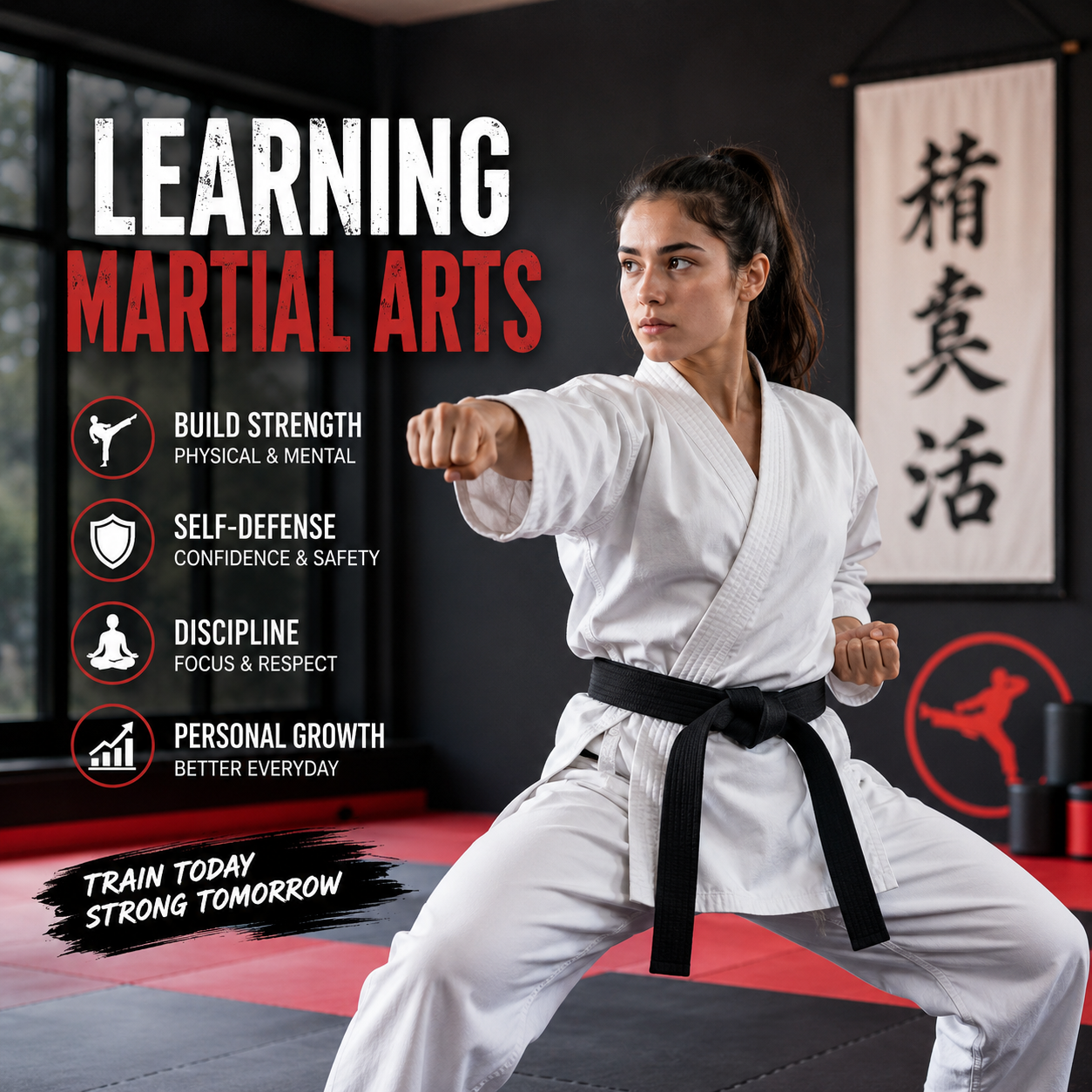
Learning martial arts is more than just mastering punches, kicks, or self-defense moves. It is a journey that improves physical fitness, mental focus, discipline, and self-confidence. Whether your goal is to stay active, protect yourself, or develop a new skill, martial arts can provide lifelong benefits for people of all ages.
In recent years, interest in martial arts has grown significantly because it combines fitness with practical life skills. From karate and taekwondo to Brazilian jiu-jitsu and Muay Thai, there are many styles available for beginners to explore.
Why Learning Martial Arts Is Beneficial
One of the biggest advantages of learning martial arts is the balance it creates between the body and mind. Training sessions improve strength, flexibility, endurance, and coordination while also teaching patience and self-control.
Martial arts also help reduce stress. Many students find that regular practice increases focus and provides a healthy outlet for releasing tension. Beyond physical improvements, martial arts encourage discipline, respect, and perseverance—qualities that are valuable in everyday life.
Another major benefit is personal safety. Learning basic defensive techniques can help individuals feel more prepared and confident in difficult situations.
Martial Arts Training for Beginners
Starting martial arts for the first time may feel intimidating, but beginners can progress quickly with the right mindset and guidance. The key is choosing a martial art that matches your personal goals and fitness level.
For example:
- Karate focuses on striking techniques and discipline.
- Taekwondo emphasizes fast kicks and flexibility.
- Brazilian jiu-jitsu teaches grappling and ground defense.
- Muay Thai combines punches, elbows, knees, and kicks.
- Kung Fu blends traditional techniques with fluid movement.
When beginning martial arts training for beginners, it is important to focus on the fundamentals rather than advanced moves. Most instructors start students with basic stances, footwork, breathing techniques, and simple combinations.
Consistency matters more than intensity. Training two or three times a week can help beginners gradually build stamina, confidence, and muscle memory. Wearing proper gear and warming up before training also reduces the risk of injuries.
Tips for Beginners
Here are a few practical tips for anyone starting martial arts training:
- Set realistic goals – Focus on gradual improvement instead of perfection.
- Stay patient – Progress takes time and regular practice.
- Listen to instructors – Proper guidance helps prevent mistakes and injuries.
- Maintain fitness outside class – Stretching and cardio can improve performance.
- Respect the learning process – Martial arts are built on discipline and continuous growth.
Self-Defense Techniques and Skills
One of the main reasons people begin martial arts training is to learn practical self-defense techniques and skills. While each martial art has unique methods, most systems teach awareness, reaction, and defensive movement.
Effective self-defense starts with prevention. Martial arts training often teaches students how to remain calm, recognize threats, and avoid dangerous situations whenever possible.
Basic self-defense skills commonly include:
- Escaping grabs and holds
- Blocking strikes effectively
- Maintaining balance and posture
- Using leverage instead of brute strength
- Improving reaction time and awareness
Confidence plays a major role in self-defense. People who train regularly often carry themselves with greater awareness and composure, which can discourage potential threats.
However, martial arts are not about aggression. Responsible training emphasizes control, respect, and using techniques only when necessary for protection.
How to Learn Martial Arts at Home
Not everyone has access to a martial arts school, which is why many people now explore how to learn martial arts at home. While professional instruction is ideal, home practice can still be highly effective for building foundational skills.
Beginners can start with simple exercises such as:
- Shadowboxing
- Basic kicks and punches
- Stretching routines
- Footwork drills
- Strength and conditioning workouts
Online tutorials, virtual classes, and instructional videos can guide practicing safely at home. Creating a consistent training schedule is important for steady improvement.
To make home training effective:
- Practice in a safe, open space
- Use mirrors to check posture and technique
- Focus on correct form instead of speed
- Start slowly to avoid injuries
- Combine cardio and flexibility exercises with technique training
Although home training can improve fitness and coordination, joining a martial arts gym occasionally can help refine techniques through professional feedback and partner drills.
Choosing the Right Martial Art
Selecting the right martial art depends on your goals. If your focus is fitness and flexibility, taekwondo may be a good option. For self-defense and close combat, Brazilian jiu-jitsu or Krav Maga can be effective. Those interested in discipline and traditional practice may enjoy karate or kung fu.
Trying beginner classes or introductory sessions can help you decide which style feels most comfortable and enjoyable.
Final Thoughts
Learning martial arts is a rewarding experience that improves both physical and mental well-being. From building confidence to mastering self-defense techniques and skills, martial arts offer benefits that extend far beyond training sessions.
Whether you join a local dojo or explore how to learn martial arts at home, the most important step is simply getting started. With patience, consistency, and the right mindset, anyone can begin their martial arts journey and develop skills that last a lifetime.
Note: ElectroWeld is reader-supported. If you click a link and buy something we may receive a small commission at no extra cost to you., learn more on disclaimer.

Walton M. Edwards was born in 1994 in a coal mining town, he has worked as a welder, a hardware salesman, and as a pipe fitter and has been employed as a laborer for about fifty years. Walton is a native of Wabash County in Indiana, but he now resides in Bloomington, Indiana.