
Welding aluminum is a fascinating topic for many people who work with metal. If you have a stick welder (also called Shielded Metal Arc Welding or SMAW), you might wonder: can you weld aluminum with it? Many people believe you need special equipment like a TIG or MIG welder for aluminum. But the truth is more complex. This guide explores what really happens when you try to weld aluminum with a stick welder, why it’s challenging, how you can try it, what results to expect, and what alternatives you should know. Whether you’re a hobbyist, a student, or a professional, you’ll get a full understanding and practical guidance on this topic—no skipped steps, no fluff.
Why Welding Aluminum Is Different From Welding Steel
Aluminum is a unique metal. It’s light, strong, and resists corrosion. But it’s also much harder to weld compared to steel. To understand why, you need to know a few key facts:
- Melting point: Aluminum melts at about 660°C (1220°F), which is lower than steel. But it also conducts heat much faster—about five times more than steel.
- Oxide layer: Aluminum surfaces quickly form a thin layer of aluminum oxide. This layer melts at over 2000°C (3632°F), much higher than the aluminum itself. This means the oxide doesn’t melt away when you heat the metal, unless you specifically remove it.
- Thermal expansion: Aluminum expands more than steel when heated. This leads to distortion and cracking if you’re not careful.
- Porosity risk: Molten aluminum can absorb hydrogen, which forms bubbles as the metal cools. This causes weak, porous welds.
These differences mean that welding aluminum needs careful preparation, correct technique, and sometimes special tools or materials.
How Stick Welding Works
Stick welding is one of the oldest and simplest welding methods. It uses a metal rod (the “stick”) coated in flux. When an electric current passes through, the rod melts and joins the metals together. The flux coating burns and creates a gas shield, protecting the molten metal from air.
Stick welding is popular because it’s simple, portable, and works outdoors, even in windy conditions.
But stick welding was mainly designed for steel. When you use it for aluminum, you face several new problems.
Can You Weld Aluminum With A Stick Welder?
The short answer is: Yes, you can weld aluminum with a stick welder. But it is much more difficult than welding steel, and the results are often lower quality. The main challenges include:
- Controlling heat: Aluminum’s fast heat conduction makes it easy to burn through or warp the metal.
- Cleaning the oxide layer: The stick welding process does not remove the tough oxide layer as easily as TIG welding.
- Getting strong welds: Stick welding often creates welds that are brittle or porous on aluminum.
- Finding the right electrodes: You must use special electrodes designed for aluminum, not the usual rods for steel.
Let’s explore these challenges and what you can do about them.
Choosing The Right Stick Welding Electrodes For Aluminum
If you want to weld aluminum with a stick welder, you need the correct electrode. The most common type is the E4043 aluminum electrode. This rod is made from an aluminum-silicon alloy, which helps reduce cracking and porosity.
Here’s a closer look at popular electrodes for stick welding aluminum:
| Electrode Type | Main Use | Key Features |
|---|---|---|
| E4043 | General aluminum welding | Low cracking, good flow, easy to find |
| E5356 | High strength aluminum | Stronger welds, more sensitive to cracking |
| E1100 | Pure aluminum, repairs | Very soft welds, mostly for pure aluminum |
E4043 is the most common and easiest to use for beginners. E5356 gives a stronger weld but is harder to use and cracks more easily. E1100 is rare and mainly for specific, soft aluminum jobs.
Preparing Aluminum For Stick Welding
Preparation is critical when welding aluminum, especially with a stick welder. A poor surface leads to weak, porous welds.
- Remove the oxide layer: Use a stainless steel wire brush (dedicated to aluminum only) or a chemical oxide remover just before welding. This lets the weld metal bond with pure aluminum, not the hard oxide.
- Degrease the surface: Clean off oil, grease, and dirt with acetone or another solvent. Aluminum is sensitive to contamination.
- Fit-up and clamping: Because aluminum moves and warps with heat, clamp your pieces tightly and consider using a heat sink (like a copper plate) to absorb extra heat.
- Preheating: For thicker aluminum, preheat the area with a torch to 150–200°C (302–392°F). This helps prevent cracking and makes the weld flow better.
Many beginners skip cleaning or preheating. This is one of the main reasons their welds fail.
Setting Up Your Stick Welder For Aluminum
Stick welders come in AC (alternating current), DC (direct current), or both. For aluminum, AC is usually preferred. Here’s why:
- AC helps break up the oxide layer on the surface as you weld.
- DC can work, but often results in more arc blow and a less stable arc with aluminum electrodes.
Key setup steps:
- Use AC if possible: Set your machine to AC mode. If your welder only does DC, use DC reverse polarity (electrode positive).
- Set the correct amperage: Aluminum electrodes require higher amperage than steel rods. Check the manufacturer’s chart, but expect to use about 1 amp per 0.001” (0.025mm) of material thickness, often 70–150 amps depending on rod size.
- Choose the right rod size: 1/8” (3.2mm) is common for most jobs. Thicker rods need more current.
- Short arc length: Keep the electrode close to the workpiece. A long arc causes excess spatter and poor shielding.
- Use a fast travel speed: Move the rod quickly to avoid burning through or overheating the aluminum.
Step-by-step Guide: How To Weld Aluminum With A Stick Welder
Welding aluminum with a stick welder is not as simple as with steel. Each step requires extra care. Here’s a practical guide for beginners:
1. Prepare Your Workspace
Work in a well-ventilated area. Aluminum welding gives off fumes and spatter. Wear protective gloves, jacket, and a welding helmet with at least a #10 shade.
2. Clean And Fit Your Workpieces
Use a dedicated stainless steel wire brush to scrub the weld area. Wipe with acetone. Clamp the pieces tightly, as movement leads to weak welds.
3. Select Your Electrode And Settings
Choose E4043 rods, 1/8” (3. 2mm) for most jobs. Set your welder to AC, 80–120 amps to start. Adjust as needed for your metal thickness.
4. Preheat If Needed
For thick pieces (over 1/4” or 6mm), preheat the joint with a propane torch until it feels hot to the touch (about 150°C or 302°F). Do not overheat or melt the aluminum.
5. Start Welding
Strike an arc as you would with steel, but keep it short and stable. Hold the rod at a slight angle (about 10–15 degrees from vertical). Move the rod quickly along the joint—aluminum melts fast.
6. Watch For Puddle Formation
The molten puddle will appear shiny and reflective. Do not linger in one spot. If the puddle gets too large, you risk burning through.
7. Chip Slag And Inspect
Let the weld cool slightly, then chip off the slag. Aluminum stick welds produce a thick, glassy slag. Inspect for cracks, holes, and porosity.
8. Make Multiple Passes If Needed
For thicker metal, use several quick passes instead of a single slow one. This prevents excess heat and distortion.
9. Clean Up
Remove any leftover slag with a wire brush. Avoid contaminating the weld with steel brush bristles.
Key Problems And Limitations Of Stick Welding Aluminum
Welding aluminum with a stick welder is possible, but you should know the main problems:
1. Weak, Brittle Welds
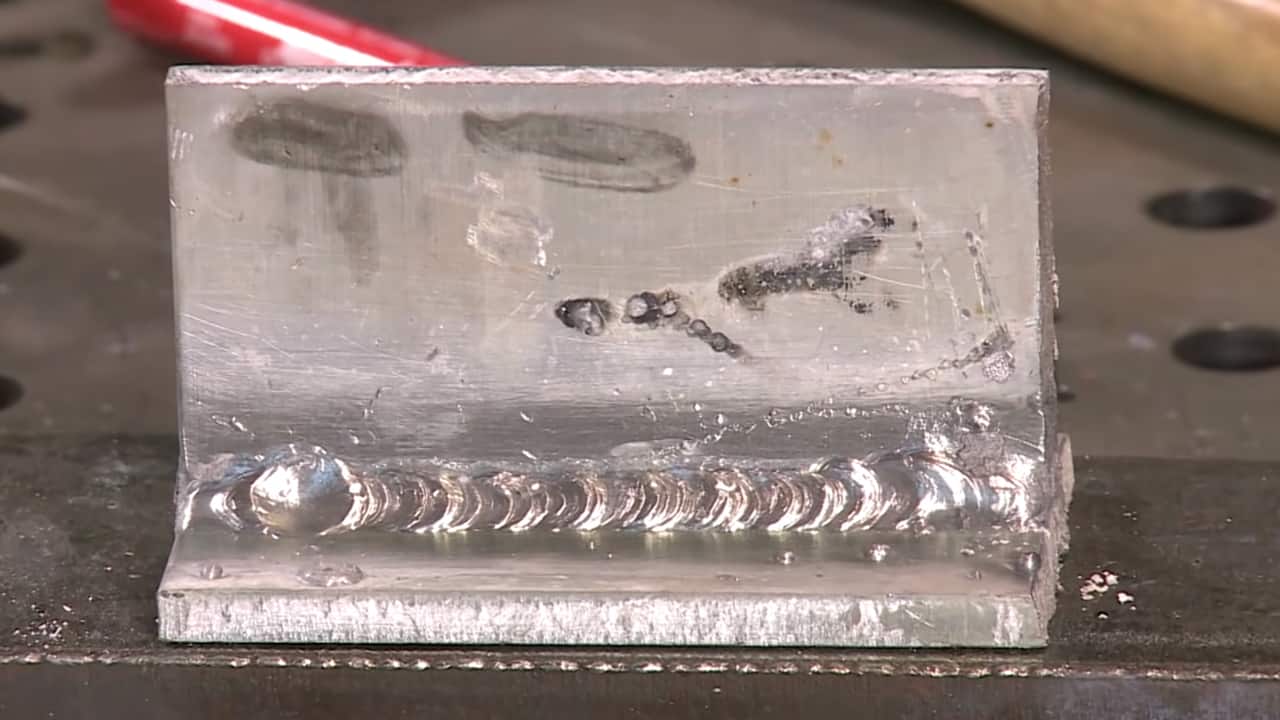
Stick welding often produces brittle welds on aluminum. The process is less controlled than TIG or MIG, and cracks are common, especially if you do not clean or preheat the metal.
2. Porosity
Aluminum easily traps hydrogen in the weld pool. If your metal or rods have moisture, the weld will have bubbles (porosity). This weakens the joint and makes it look rough.
3. Heavy Slag
Aluminum stick welding produces thick, sticky slag. If you don’t remove it fully, it contaminates the next weld pass.
4. Difficult Arc Control
The arc is less stable on aluminum than steel. You might get more spatter, arc blow, or trouble keeping the rod from sticking.
5. Limited Thickness
Stick welding works best on thicker aluminum (over 1/8” or 3mm). Thin sheets often burn through or warp. For thin aluminum, TIG or MIG is much better.
6. Poor Appearance
Even with skill, aluminum stick welds look rough compared to TIG or MIG welds. This may not matter for repairs, but is an issue for visible welds.
Credit: www.reddit.com
When Is Stick Welding Aluminum A Good Idea?
Despite its drawbacks, stick welding aluminum does have real uses:
- Quick repairs in the field: If you need to fix a broken aluminum part and have only a stick welder, this method works in a pinch.
- Outdoor jobs: Stick welding handles wind and weather better than MIG or TIG, which require shielding gas.
- Thick aluminum parts: Large, heavy aluminum pieces (like castings or industrial parts) are more forgiving with stick welding.
- Budget constraints: Stick welders and aluminum rods are cheaper than buying a TIG or MIG setup.
But for critical work, or jobs that require neat, strong welds, other methods are usually better.
Alternatives To Stick Welding Aluminum
If you want better results, consider other welding methods:
Tig Welding (gtaw)
This is the best method for aluminum. TIG uses a non-consumable tungsten electrode and argon gas to shield the weld. You get clean, precise, and strong welds with little spatter.
- Pros: Best control, neat welds, good for thin aluminum
- Cons: Expensive, slower, needs skill and argon gas
Mig Welding (gmaw)
MIG uses a wire fed through a gun and argon or argon/helium gas. It’s faster and easier than TIG for beginners.
- Pros: Fast, good for thick and thin aluminum, less skill needed
- Cons: Needs gas, can struggle outdoors, some spatter
Brazing And Soldering
For non-structural repairs, aluminum can be joined with special aluminum brazing rods and a torch. This is not true welding, but can be useful for leaks or cracks.
| Method | Best For | Main Drawbacks |
|---|---|---|
| Stick (SMAW) | Heavy, outdoor repairs | Poor finish, brittle welds |
| TIG (GTAW) | Clean, precise welds | Slow, expensive |
| MIG (GMAW) | General fabrication | Needs shielding gas |
| Brazing | Non-critical fixes | Not as strong, not true welding |
Tips For Success When Stick Welding Aluminum
If you must use a stick welder for aluminum, these tips will improve your results:
- Store rods properly: Aluminum rods absorb moisture, which causes porosity. Keep them dry, ideally in a rod oven.
- Use short welds: Make short, quick welds and let the metal cool between passes. This reduces heat distortion.
- Overweld slightly: Make the weld bead a little bigger than you think you need, then grind it back if appearance matters.
- Don’t weave: Unlike steel, weaving the rod side-to-side creates weak, bubbly welds on aluminum. Use a straight, quick motion.
- Practice on scrap first: Aluminum stick welding is tricky. Always test your settings and technique on scrap metal before the real job.
- Expect to grind and clean: Plan to grind the welds and clean up slag for a better finish.
A common beginner mistake is using steel rods or not cleaning the workpiece. Steel rods will not join aluminum, and leftover dirt or oxide will ruin the weld.
Safety Precautions For Welding Aluminum
All welding comes with risks, but aluminum has some special safety concerns:
- Fumes: Aluminum welding can produce fumes containing ozone, nitrogen oxides, and sometimes fluorides from the flux. Always weld in a well-ventilated area and consider a respirator.
- UV radiation: Stick welding produces intense UV light. Wear a proper helmet and cover all skin to avoid burns.
- Spatter and slag: Aluminum slag is sticky and hot. Wear gloves and keep flammable materials away.
- Electrical safety: Stick welders use high current. Make sure your cables, clamps, and insulation are in good shape.
Never weld near water or in wet conditions—aluminum is highly conductive and increases shock risk.
Credit: weldguru.com
Real-world Examples: When People Use Stick Welding For Aluminum
- Farm equipment repairs: Farmers often fix broken aluminum irrigation pipes or parts using a stick welder, especially far from a workshop.
- Marine repairs: In boatyards, stick welding is sometimes used to patch aluminum hulls quickly, especially when weather would blow away shielding gas.
- Construction sites: Workers use stick welders to fix aluminum scaffolding, platforms, or supports when other tools are not available.
In all these cases, the focus is on speed and practicality, not perfect appearance.
Common Myths About Stick Welding Aluminum
Many people repeat outdated or wrong ideas about aluminum stick welding. Here are a few you might hear:
- “You can’t weld aluminum with a stick welder.” Not true—you can, but it’s harder and the results are not as good as with TIG or MIG.
- “Any stick rod will work.” Only special aluminum rods (like E4043) work. Steel or stainless rods will not join aluminum.
- “You don’t need to clean aluminum.” This is a sure way to get bad welds. Cleaning is even more important for aluminum than for steel.
- “Stick welding aluminum is just like welding steel.” Aluminum welds much faster, is more sensitive to heat, and needs different technique.
Cost Comparison: Stick Welding Aluminum Vs. Other Methods
It’s useful to know how stick welding aluminum compares in cost and equipment needs to other methods.
| Welding Method | Equipment Cost | Consumables | Skill Level Needed |
|---|---|---|---|
| Stick (SMAW) | Low | Aluminum rods | Medium |
| TIG (GTAW) | High | Tungsten, argon gas, rods | High |
| MIG (GMAW) | Medium to high | Wire, argon gas | Medium |
| Brazing | Low | Brazing rods, torch | Low |
Stick welding is usually the cheapest way to join aluminum, but you pay in quality and appearance.
Aluminum Alloys And Their Weldability With Stick Welding
Not all aluminum alloys weld the same. Some are easy; others are nearly impossible with a stick welder.
- Weldable alloys: 1xxx, 3xxx, and 5xxx series (pure aluminum and magnesium alloys) weld best with stick welding.
- Difficult alloys: 2xxx and 7xxx series (copper and zinc alloys) are very hard to weld with any process, and almost impossible with stick.
- Cast aluminum: Can sometimes be welded, but is prone to cracking and porosity.
Always check the alloy type before starting. If you don’t know it, do a test weld on scrap and check for cracks or porosity.

Credit: www.youtube.com
Non-obvious Insights For Success
- Rod angle and travel speed matter more than you think: Many beginners hold the rod at too steep an angle or move too slowly. For aluminum, a shallow angle (10–15 degrees) and quick movement prevent burn-through and slag buildup.
- Electrode storage is critical: Aluminum stick electrodes absorb moisture from the air in hours. If they’re not kept dry (ideally in an oven at 120°C/250°F), you’ll get holes and weak welds—even if everything else is perfect.
- Sound is a good guide: A smooth, hissing sound usually means a good weld. Popping, spitting, or silence means your arc is too long, too short, or contaminated.
Should You Learn Stick Welding Aluminum As A Beginner?
If you’re new to welding, learning to weld aluminum with a stick welder is a tough path. Most people start with steel, then move to aluminum using MIG or TIG, where you have more control. Stick welding aluminum is worth learning if you:
- Need to repair aluminum outdoors, where wind makes MIG/TIG impossible
- Have only a stick welder and must make do
- Want to practice advanced welding skills
But for most, it’s better to master steel welding first, then try aluminum with easier methods.
Environmental Concerns: Is Stick Welding Aluminum Green?
Aluminum welding uses a lot of electricity, but stick welding is one of the less energy-intensive methods. However, the flux on aluminum rods can release fluoride compounds and other gases. Always dispose of slag and used rods properly, and avoid welding in enclosed spaces.
For more on welding safety and environmental impact, see Wikipedia on Welding.
Frequently Asked Questions
What Is The Best Rod For Stick Welding Aluminum?
The E4043 aluminum electrode is the best choice for most stick welding jobs on aluminum. It is widely available, easy to use, and produces fewer cracks than other rods. For special applications, E5356 may be used for stronger welds, but it’s less forgiving.
Can You Stick Weld Thin Aluminum Sheets?
Stick welding is not ideal for thin aluminum (under 1/8” or 3mm). The process is too hot and fast, leading to burn-through and warping. For thin sheets, TIG or MIG welding is a much better choice.
Why Does My Stick Weld On Aluminum Have Holes And Cracks?
Holes (porosity) are caused by moisture or contaminated rods, dirty metal, or too long an arc. Cracks happen if the metal is not preheated or if you use the wrong rod or technique. Always clean the metal, store rods dry, and use short, quick welds.
Do I Need To Use Ac Or Dc For Stick Welding Aluminum?
AC (alternating current) is preferred for stick welding aluminum. It helps break through the oxide layer and gives a more stable arc. If your welder only does DC, use electrode positive (reverse polarity), but results may be less consistent.
How Strong Are Stick Welds On Aluminum Compared To Tig Or Mig?
Stick welds on aluminum are not as strong or clean as TIG or MIG welds. They are more likely to crack, contain porosity, and have a rougher appearance. For critical joints or visible welds, TIG or MIG is strongly recommended.
—
Welding aluminum with a stick welder is a skill that can be learned, but it’s not the easiest or best method for most projects. If you need a fast, portable fix—especially outdoors—a stick welder with the right rods and careful preparation can get the job done.
But for cleaner, stronger, and more attractive welds, consider TIG or MIG welding whenever you can. As with all welding, safety, cleaning, and preparation are key to success. With patience and the right technique, even a basic stick welder can join aluminum—just don’t expect it to be easy or perfect the first time.
Note: ElectroWeld is reader-supported. If you click a link and buy something we may receive a small commission at no extra cost to you., learn more on disclaimer.
Walton M. Edwards was born in 1994 in a coal mining town, he has worked as a welder, a hardware salesman, and as a pipe fitter and has been employed as a laborer for about fifty years. Walton is a native of Wabash County in Indiana, but he now resides in Bloomington, Indiana.