

Finding the right welding company can make or break a project. Whether you need complex industrial solutions, custom fabrication, or even small repairs, choosing a skilled and reliable partner is key. The best welding companies are not just about strong welds—they bring expertise, safety, certifications, and cutting-edge technology to every job.
Let’s dive into what sets the top welding companies apart, what to look for, and a detailed look at the industry’s leaders.
What Makes A Welding Company Stand Out?
The welding industry is wide and varied. Some companies focus on massive infrastructure, others on precise, small-scale work. But a few core factors separate the best from the rest:
- Certifications & Qualifications: Top companies meet international standards, such as AWS (American Welding Society), ISO 9001, and local safety requirements. These certifications are not just paperwork. They require regular audits, training, and strict process control. For example, a company with ISO 9001 will have a detailed quality management system, which leads to fewer mistakes and higher consistency.
- Range of Services: From arc welding to laser welding, the best firms offer multiple options, including fabrication, design, and repair. A diverse service list means they can recommend the best solution, not just the one method they know.
- Technology & Equipment: Leaders use advanced machinery—robotic welders, CNC plasma cutters, and quality testing tools. Modern equipment not only increases speed and accuracy but also allows for advanced welding techniques, such as pulse or hybrid welding, that are impossible with older machines.
- Safety Record: Strict safety protocols and training are non-negotiable. The best companies track incidents, run regular safety drills, and invest in protective equipment. They often have dedicated safety officers and detailed risk assessments for every project.
- Experience & Reputation: Years in the business, high-profile projects, and satisfied clients show reliability. Look for companies with a public portfolio and testimonials from past clients.
- Innovation: Adopting new techniques, eco-friendly methods, or unique materials keeps top firms ahead. These companies often partner with research institutions, test new alloys, or participate in industry conferences to stay on the leading edge.

Non-obvious insight: Many beginners overlook how important in-house engineering teams are. The best welding companies often have dedicated engineers who help solve design challenges before welding even begins. This means fewer mistakes and better project outcomes. For instance, an in-house engineer can suggest a small design change that saves hours of welding or eliminates a weak point in the final structure.
Another point people miss: Some top welding firms offer on-site mobile services. They bring equipment and expertise directly to your location, saving time and reducing transport risks, especially for large or fixed structures. Mobile welding teams can set up temporary workshops at construction sites, factories, or even remote locations, handling urgent repairs or modifications that would be expensive or impossible to transport.
In addition to these, strong project management is another factor that separates the best from the rest. Top welding companies usually have experienced project managers who coordinate schedules, communicate with clients, and keep projects on budget and on time.
Now, let’s explore the best welding companies shaping the industry worldwide.
Best Welding Companies Around The Globe
Each leading welding company has its own specialties and strengths. The following list highlights the most trusted, innovative, and experienced names in the field. These companies are known not just for their technical ability, but for their deep industry knowledge, safety culture, and commitment to quality.
1. Lincoln Electric
Headquarters: Cleveland, Ohio, USA
Founded: 1895
Specialties: Welding equipment manufacturing, automation, education, and consumables
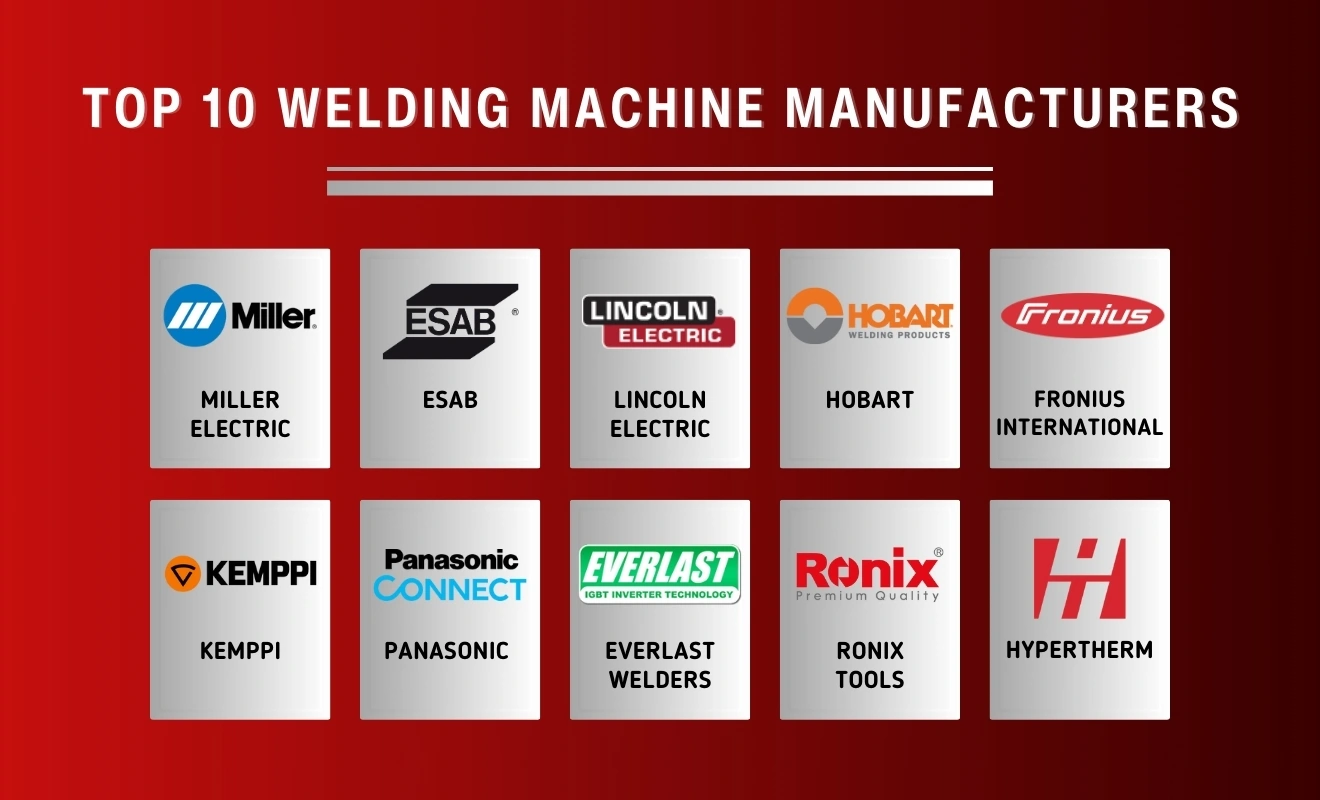
Lincoln Electric is often the first name that comes to mind in the welding world. Known for their quality welding machines, consumables, and training programs, they serve industries from automotive to shipbuilding. Their research and development department constantly pushes innovation, especially in robotic automation and green welding technologies. Lincoln Electric’s technical support is world-class, offering training and certifications for welders globally.
Key strengths:
- Strong focus on R&D and sustainability. They have developed eco-friendly welding processes to reduce emissions.
- Leading provider of welding education, offering courses both online and at their physical centers.
- High-quality, durable products, including specialized machines for aluminum, stainless steel, and other advanced materials.
Did you know? Lincoln Electric has one of the largest welding education centers in the world. They have trained thousands of welders, and their curriculum is used as a model in many vocational schools. Their partnership with universities and technical schools helps bridge the gap between academic theory and practical skills.
Their global presence means they provide support in multiple languages and adapt to local regulations wherever they operate. For example, their offices in Europe and Asia offer region-specific technical support and training.
2. Miller Electric
Headquarters: Appleton, Wisconsin, USA
Founded: 1929
Specialties: Arc welding equipment, training, automation
Miller Electric is a giant in the field, especially popular for portable and industrial-grade MIG, TIG, and stick welders. Their machines are known for reliability and user-friendly controls, making them a favorite in both small workshops and large industrial settings. Miller also invests heavily in welder safety technology, such as advanced fume extraction systems.
Key strengths:
- User-friendly interface across products. Their digital displays and settings make it easy for new operators to avoid common mistakes.
- Broad range of machines for different skill levels. Whether you’re a hobbyist or working in shipbuilding, Miller has a model for you.
- Excellent after-sales service. Their customer support teams help with troubleshooting, repairs, and even process optimization.
Non-obvious insight: Miller Electric regularly collaborates with vocational schools to design equipment that matches real-world training needs. Their educational partnerships ensure that new welders are trained on the latest technology. They also sponsor welding competitions and scholarships to encourage young talent in the industry.
Miller was a pioneer in inverter technology, which makes welding machines lighter, more energy-efficient, and easier to control. This innovation has had a significant impact, especially in mobile and field welding applications.
3. Esab
Headquarters: Gothenburg, Sweden
Founded: 1904
Specialties: Welding and cutting equipment, automation, consumables
ESAB is recognized for its global reach and innovation in both equipment and consumables. Their cutting machines and automated welding solutions are popular in heavy industries like shipbuilding, construction, and energy. ESAB’s commitment to digital solutions (like remote monitoring) gives clients more control over quality and efficiency.
Key strengths:
- International presence and service network. ESAB can deliver equipment and support quickly in over 80 countries.
- Full range of welding and cutting solutions. From small hand-held torches to massive robotic arms, they cover it all.
- Strong focus on automation and digitalization. Their WeldCloud platform allows managers to monitor and analyze welding data in real time.
ESAB is also a leader in developing new filler metals for special applications, such as corrosion-resistant alloys for chemical plants or ultra-high-strength wires for offshore rigs.
Their innovation extends to health and safety. ESAB designs torches and helmets that reduce operator fatigue, and many of their systems include fume extraction and noise reduction features.
4. Airgas
Headquarters: Radnor, Pennsylvania, USA
Founded: 1982
Specialties: Welding gases, safety equipment, welding supplies
Airgas is more than just a supplier—they’re a one-stop shop for industrial gases (like argon and oxygen), safety products, and welding gear. They support various sectors, from food processing to aerospace. Their logistics network ensures fast delivery, which is vital for industries that can’t afford downtime.
Key strengths:
- Reliable supply chain for gases and materials. Airgas guarantees delivery schedules and has backup plans for emergencies.
- Comprehensive safety solutions. They provide training, safety audits, and custom safety kits tailored to different industries.
- Strong customer support. Airgas offers 24/7 technical assistance and emergency deliveries for critical operations.
Airgas also operates local retail stores, making it easy for small businesses and contractors to get supplies, rent equipment, or consult with experts. Their local presence is a big advantage in time-sensitive situations.
Their involvement in sustainability is growing, too. Airgas is working on supplying low-carbon and renewable gases, helping clients reduce their environmental footprint.
5. Hobart Brothers Company
Headquarters: Troy, Ohio, USA
Founded: 1917
Specialties: Welding filler metals, equipment
Hobart focuses on producing welding wires, rods, and fluxes. Their products are trusted for consistent weld quality and are used in everything from farming equipment to construction. Hobart also offers technical support to help clients select the right consumables for their specific needs.
Key strengths:
- High-quality filler metals, including specialty products for demanding applications like pipeline welding or hardfacing.
- Technical support for process improvement. Hobart’s experts often visit customer sites to troubleshoot problems and recommend process changes.
- Trusted in heavy-duty industries, especially where weld strength and durability are critical.
Hobart invests in research to improve the performance of their welding consumables. For example, they have developed wires that reduce spatter, saving time on cleanup and improving weld appearance.
They also provide detailed guidance on storage and handling of consumables—a step many overlook but which is vital for quality welds, as moisture or contamination can cause weld defects.
6. Fronius International Gmbh
Headquarters: Pettenbach, Austria
Founded: 1945
Specialties: Welding technology, solar energy, battery charging
Fronius stands out for its high-efficiency welding machines and focus on energy-saving solutions. Their intelligent welding systems adapt settings automatically, which is especially useful for precision work in electronics, automotive, and aerospace. Fronius is a leader in digital welding management, helping clients track productivity and quality.
Key strengths:
- Industry-leading digital solutions. Their WeldCube platform connects machines, tracks every weld, and generates reports for audits and quality control.
- Energy-efficient equipment. Fronius machines use advanced inverter technology, reducing power consumption and operating costs.
- Strong R&D in automation, including collaborative robots (cobots) that work safely alongside humans.

Fronius has also led the way in “cold metal transfer” (CMT) welding, a process that drastically reduces heat input. This is crucial for welding thin materials and for applications where distortion must be minimized.
Their focus on sustainability is notable—they design machines that last for years and are easy to upgrade with new software, reducing electronic waste.
7. Babcock & Wilcox
Headquarters: Akron, Ohio, USA
Founded: 1867
Specialties: Power generation, industrial welding, boiler services
Babcock & Wilcox is a pioneer in industrial-scale welding for the energy, environmental, and industrial markets. Their teams handle complex, high-temperature welding on power plants and boilers. The company is known for its advanced metallurgy and ability to work with exotic alloys.
Key strengths:
- Expertise in high-pressure, high-temperature welding. Their procedures are validated for extreme conditions where failure is not an option.
- Experience with large-scale infrastructure, including nuclear and fossil fuel plants.
- Strong safety protocols. They have a culture of “zero harm,” with detailed risk management plans for every job.
Babcock & Wilcox often custom-builds welding procedures for unique materials or challenging environments. Their engineers are involved from the design phase, ensuring weldability and performance.
They also conduct failure analysis and repairs on critical infrastructure, helping clients extend the life of expensive equipment.
8. Arcelormittal
Headquarters: Luxembourg
Founded: 2006 (merger origins date back to 1976)
Specialties: Steel production, welding solutions, R&D
As the world’s largest steel producer, ArcelorMittal also offers welding and joining technologies for construction, automotive, and energy. They innovate in steel fabrication and provide technical support for complex welding projects, especially in structural engineering.
Key strengths:
- Deep expertise in steel and metallurgy. Their research centers develop new grades of steel with improved weldability, strength, and corrosion resistance.
- R&D for new welding methods, such as laser and hybrid processes.
- Global reach and support. They provide technical teams for on-site troubleshooting and training.
ArcelorMittal’s steel is used in skyscrapers, bridges, and cars worldwide. They work closely with clients to optimize welding techniques for each new steel product.
They also publish technical guides, helping engineers and welders select the right processes and parameters for different applications.
9. Larsen & Toubro (l&t)
Headquarters: Mumbai, India
Founded: 1938
Specialties: Engineering, construction, heavy fabrication, welding
L&T is one of Asia’s top engineering firms, known for their heavy fabrication and industrial welding. Their projects include refineries, power plants, and offshore platforms. L&T’s welding division uses advanced technology and has a strong safety record, which is critical in large-scale construction.
Key strengths:
- Skilled workforce for large projects. L&T invests in continuous training and certification for their welders.
- Advanced welding technology, including automated and robotic systems for heavy steel fabrication.
- Proven safety and quality management. L&T follows international safety standards and runs regular audits.
L&T’s experience with high-stress, high-temperature welds is especially important in sectors like oil & gas, where a failed weld can mean environmental disaster.
They also have in-house labs for materials testing, ensuring that every weld and joint meets the highest standards before leaving the factory.
10. Aker Solutions
Headquarters: Oslo, Norway
Founded: 1841
Specialties: Energy, offshore welding, subsea infrastructure
Aker Solutions focuses on offshore oil and gas, where welding quality is crucial due to harsh environments. They excel in subsea welding, pipeline installation, and structural fabrication. Their engineers often work in extreme conditions and use remote welding technologies.
Key strengths:
- Expertise in offshore and underwater welding. Aker’s welders use specialized equipment to work at depth and in cold water.
- High standards for safety and quality, with strict procedures for every job.
- Innovative remote and robotic welding. Their ROV (remotely operated vehicle) welders can repair pipelines or structures without human divers.
Aker Solutions is also involved in renewable energy, building offshore wind platforms that require unique welding solutions for corrosion resistance and fatigue strength.
Their technical teams are used to working under pressure and tight deadlines, often coordinating with international partners.
11. Kiewit Corporation
Headquarters: Omaha, Nebraska, USA
Founded: 1884
Specialties: Construction, industrial welding, infrastructure
Kiewit is a leader in infrastructure projects—bridges, highways, power plants, and pipelines. Their welding teams are trained for both traditional and automated welding. Kiewit’s safety culture is one of the best in the industry, with strict protocols and ongoing training.
Key strengths:
- Experience on massive infrastructure projects. Kiewit has built some of North America’s largest bridges and tunnels.
- Rigorous safety and training programs. They run in-house certification and refresher courses.
- Strong focus on project management. Kiewit’s teams handle all phases, from planning and logistics to execution and quality control.
Kiewit’s ability to mobilize large teams and equipment makes them a go-to partner for urgent repairs after natural disasters or accidents.
They also invest in community engagement and local workforce development, training workers in the regions where they operate.
12. Chicago Bridge & Iron Company (cb&i)
Headquarters: Houston, Texas, USA
Founded: 1889
Specialties: Storage tanks, pressure vessels, industrial welding
CB&I (now part of McDermott International) is famous for building large storage tanks and pressure vessels. Their welders handle critical welds in oil, gas, and chemical industries. The company is known for precision welding and handling complex, high-stress materials.
Key strengths:
- World leader in tank and vessel construction. Their projects include some of the largest LNG tanks ever built.
- High standards for quality assurance, including third-party inspections and advanced testing.
- Specialized welding for hazardous materials. CB&I has procedures for welding exotic alloys and lining tanks for chemical resistance.
Their teams often work on-site, setting up temporary workshops and handling logistics in challenging locations.
CB&I also provides emergency repair services, using rapid-deployment teams to minimize downtime for critical infrastructure.
13. Fluor Corporation
Headquarters: Irving, Texas, USA
Founded: 1912
Specialties: Engineering, procurement, construction, welding
Fluor is a global leader in EPC (engineering, procurement, construction) services. Their welding teams work on oil refineries, power plants, and infrastructure. Fluor’s quality management systems ensure every weld meets strict standards.
Key strengths:
- End-to-end project expertise. Fluor can handle everything from design and procurement to construction and commissioning.
- Strict quality control and documentation. Every weld is logged, tested, and tracked.
- Global presence and resources. Fluor can mobilize teams and equipment anywhere in the world.
Fluor’s safety culture is deeply embedded—they have detailed risk assessments for every job, and their safety record is among the best in the industry.
Their technical teams help clients navigate complex regulations, such as meeting ASME or international codes for pressure equipment.
14. Bechtel Corporation
Headquarters: Reston, Virginia, USA
Founded: 1898
Specialties: Construction, project management, welding
Bechtel is one of the world’s largest construction companies, handling complex welding in nuclear, civil, and energy projects. Their teams are skilled in working with challenging materials and environments. Bechtel invests in welder training and technology upgrades.
Key strengths:
- Vast experience in high-risk projects, such as nuclear reactors and LNG plants.
- Advanced welder training programs. Bechtel runs its own training centers and partners with technical schools.
- Emphasis on safety and compliance. Their teams undergo regular audits and third-party inspections.
Bechtel is also a pioneer in modular construction, where large parts of a project are built in factories and welded together on site. This reduces time, cost, and risk.
Their project managers are known for clear communication and transparency, which clients appreciate in complex or high-stakes projects.
15. Hyundai Welding Co., Ltd.
Headquarters: Seoul, South Korea
Founded: 1975
Specialties: Welding consumables, equipment, automation
Hyundai Welding is known for its innovative welding consumables and equipment. They serve heavy industries such as shipbuilding, automotive, and construction. Hyundai’s R&D keeps them at the forefront of eco-friendly welding solutions.
Key strengths:
- Leading in consumables for large industries. Their products are widely used in Asian shipyards and car factories.
- Focus on green and efficient welding. Hyundai develops wires and fluxes that reduce fumes and energy use.
- Wide distribution network, ensuring fast delivery and local support.
Hyundai’s commitment to research has resulted in consumables designed for the latest high-strength steels, keeping pace with advances in materials science.
They also offer detailed process support, helping clients fine-tune welding parameters for the best results.
16. Nippon Steel & Sumikin Welding Co., Ltd.
Headquarters: Tokyo, Japan
Founded: 1935
Specialties: Welding materials, steel fabrication
Nippon Steel & Sumikin is famous for their high-quality welding materials. They provide solutions for bridges, high-rise buildings, and shipbuilding. Their products are engineered for high strength and corrosion resistance.
Key strengths:
- Strong metallurgy expertise. Their materials are tested for toughness, ductility, and resistance to cracking.
- Focus on high-performance applications, such as earthquake-resistant structures and marine environments.
- Reliable, consistent products. Nippon’s quality control ensures every batch meets stringent standards.
Their R&D teams collaborate with steelmakers and construction companies to create materials tailored for new projects and demanding conditions.
They also publish technical documents and offer training to help customers use their products correctly.
17. Itw Welding (illinois Tool Works)
Headquarters: Glenview, Illinois, USA
Founded: 1912
Specialties: Welding equipment, automation, consumables
ITW Welding owns several major brands, including Miller Electric and Hobart Brothers. They provide full welding solutions—machines, consumables, and automation. ITW is known for its strong customer support and innovative product development.
Key strengths:
- Multiple top brands under one roof. Clients can mix and match equipment and consumables for the best fit.
- Continuous innovation in welding technology. ITW invests in new materials, digital controls, and automation.
- Excellent technical support. Their specialists can help with process selection, troubleshooting, and operator training.
ITW’s global reach means they can support multinational companies with consistent products and service, reducing downtime and ensuring quality.
18. Welders Supply Company
Headquarters: Louisville, Kentucky, USA
Founded: 1948
Specialties: Welding supplies, equipment rental, repair services
Welders Supply is a top choice for small businesses and contractors. They offer a wide range of welding machines, safety gear, and consumables. Their rental and repair services help clients save money and reduce downtime.
Key strengths:
- Convenient rental and repair options. Welders Supply can quickly provide backup machines or repair a client’s equipment.
- Wide selection of products, including leading brands and specialty tools.
- Personalized customer service. Staff are often former welders who understand the challenges clients face.
Welders Supply also provides training and safety seminars, helping clients stay up-to-date on best practices and new regulations.
Their flexible approach makes them a reliable partner for urgent or one-off jobs.
19. Praxair (now Part Of Linde Plc)
Headquarters: Danbury, Connecticut, USA
Founded: 1907
Specialties: Industrial gases, welding supplies
Praxair, now under Linde plc, is a major supplier of industrial gases for welding, cutting, and fabrication. Their products are used in manufacturing, energy, and healthcare. Praxair’s distribution network ensures clients have access to gases and supplies when needed.
Key strengths:
- Global supplier of gases and equipment, with facilities in over 100 countries.
- Strong safety and compliance focus. Praxair provides gas handling training and audits.
- Technical support for gas applications, helping clients optimize welding performance and reduce costs.
Praxair also invests in sustainable solutions, such as supplying oxygen for waste-to-energy plants and carbon capture technologies.
Their expertise in gas mixtures is important for specialized welding, like stainless steel or aluminum alloys.
20. United Welding Institute
Headquarters: Pottsville, Arkansas, USA
Founded: 2016
Specialties: Welding training, certifications
United Welding Institute is a leading welding school that trains professionals for industry jobs. Their programs cover pipe welding, structural welding, and advanced processes. Graduates are highly sought after for their practical skills and certifications.
Key strengths:
- Comprehensive hands-on training. Students spend most of their time welding, not just studying theory.
- Industry-recognized certifications, such as AWS and ASME.
- Strong job placement support. Many graduates are hired before they finish their programs.

The Institute works closely with employers to keep its curriculum up-to-date and help students find jobs in high-demand sectors.
Comparing Top Welding Companies
To help you see how the industry leaders stack up, here is a comparison of some key players in terms of services, innovation, and global presence.
| Company | Main Services | Innovation | Global Reach |
|---|---|---|---|
| Lincoln Electric | Equipment, Training, Automation | High (R&D, digital solutions) | Worldwide |
| Miller Electric | Arc Welding Equipment, Training | Medium (User-focused tech) | Strong in USA, global partners |
| ESAB | Equipment, Automation, Cutting | High (Digital monitoring) | Worldwide |
| Fronius | Welding Tech, Energy, Automation | High (Smart welding systems) | Strong in Europe, global network |
| ArcelorMittal | Steel Production, Welding Solutions | Medium (Metallurgy R&D) | Worldwide |
Pro tip: When comparing welding companies for a project, always check their safety statistics, past project case studies, and client testimonials. These give real-world proof of their ability and reliability. It’s also wise to ask about their warranty and after-sales service—some companies offer extended support and free repairs for a set period.
Key Factors To Consider When Choosing A Welding Company
Picking the right welding partner can feel overwhelming. Here are the factors that truly matter:
Certifications & Standards
Only choose companies with relevant certifications—AWS, ISO 9001, and local safety and environmental standards. This ensures quality and compliance. Some projects may also require certifications like ASME Section IX (for pressure vessels) or API 1104 (for pipelines). Always ask to see the certificates and check their validity.
Experience In Your Industry
Every industry has unique needs. For example, offshore oil & gas welding demands different skills and materials than automotive manufacturing. Ask about similar projects. A company with relevant experience will know the common pitfalls and how to avoid them.
Equipment & Technology
Advanced welding technology means better quality, faster completion, and less risk. Look for companies using robotic welders, automated inspection, and smart monitoring tools. Newer machines can also weld a wider range of materials and allow for more precise control.
Safety Record
A strong safety record is non-negotiable. Ask for safety statistics and training procedures. Good companies will have a low incident rate, run regular drills, and be transparent about their safety culture.
Range Of Services
The best welding companies offer fabrication, installation, maintenance, and repair. Some also provide design engineering and project management. This means you only have to deal with one partner, saving time and reducing miscommunication.
Support & Communication
Clear communication and ongoing support make a big difference, especially for complex or long-term projects. Choose a company that is responsive and transparent. Quick, clear answers to your questions signal professionalism and reliability.

Non-obvious insight: Ask how the company handles changes or unexpected problems. The best welding firms have a clear process for dealing with surprises—like material delays or design changes—without derailing the project.
Types Of Welding Services Offered By Top Companies
Leading welding companies offer a wide range of services. Here are the main types and what they involve:
- MIG (Metal Inert Gas) Welding: Fast and good for thin or medium-thickness metals. Used in automotive and general fabrication. It’s also easier to automate, making it common in factories.
- TIG (Tungsten Inert Gas) Welding: Very precise. Ideal for stainless steel and non-ferrous metals. Often used in aerospace and food industries. TIG welds are clean, with little spatter, which means less post-weld cleanup.
- Stick Welding (SMAW): Versatile and works outdoors. Common in construction and repair. Stick welding can be done in windy or dirty environments, where other methods might fail.
- Robotic Welding: Automated, fast, and consistent. Used in large-scale manufacturing. Robots can work 24/7, improving productivity and reducing labor costs.
- Laser Welding: High precision, low heat. Used for electronics, medical devices, and high-end manufacturing. Laser welding allows for tiny, accurate welds with minimal distortion.
- Submerged Arc Welding (SAW): Deep, strong welds for thick materials. Used in shipbuilding and pipelines. SAW is efficient for long, straight welds and creates strong, defect-free joints.
- Mobile Welding: On-site services for repairs or installations where moving equipment is not possible. Mobile welders can work on construction sites, farms, or even at sea.
Non-obvious insight: Many top companies now offer hybrid welding, which combines different welding techniques to increase speed or strength. For example, laser-MIG hybrid welding is popular in car manufacturing for stronger, lighter joints. Hybrid techniques can also reduce heat input, minimizing distortion and improving final product quality.
Some companies specialize in overlay welding (adding a corrosion-resistant layer to equipment) or cladding (bonding dissimilar metals together), which are critical in industries like oil & gas or chemical processing.
The Role Of Safety And Quality In Welding
Safety and quality are at the heart of welding. Accidents can be costly—and sometimes deadly. Here’s how the best companies keep standards high:
- Regular staff training: Ongoing education keeps workers up-to-date on safety and new techniques. Some companies require refresher courses every year.
- Strict inspection: Visual checks, X-ray, ultrasonic, and other methods spot flaws before they become problems. Non-destructive testing (NDT) is a must for critical welds.
- Personal protective equipment (PPE): Helmets, gloves, jackets, and fume extractors are essential. Modern helmets have auto-darkening filters to protect eyes and reduce fatigue.
- Documentation: Every weld is recorded and checked to meet standards. This traceability is crucial for legal compliance and future maintenance.
| Safety Feature | Why It Matters | Common in Top Companies? |
|---|---|---|
| Automated Fume Extraction | Protects workers from toxic fumes | Yes |
| Real-time Weld Monitoring | Detects problems immediately | Increasingly common |
| Mandatory PPE Training | Reduces injuries | Yes |
| Third-party Inspections | Unbiased quality checks | Yes |
Non-obvious insight: Top companies often use “weld maps”—detailed diagrams showing every weld on a project, with information about the welder, process, and test results. This makes troubleshooting and repairs much easier years later.

Credit: www.codeaweld.com
Innovations Shaping The Welding Industry
Welding is changing fast, thanks to new technologies and materials. Here are some trends you’ll see at the best welding companies:
Robotic & Automated Welding
Robots now handle repetitive or dangerous welds, improving speed and consistency. This also lets human welders focus on complex or custom work. Modern robots use sensors and cameras for precise positioning, and some can even adjust parameters automatically if they detect a problem.
Digital Weld Management
Modern welders have digital interfaces, tracking each weld’s parameters and performance. This helps with quality control and makes audits easier. Managers can analyze data to spot trends, such as which shifts produce the best welds or where defects are most common.
Eco-friendly Welding
Companies are moving toward low-emission processes, energy-efficient machines, and recyclable materials. Some even use solar-powered welders. Environmentally conscious clients often require documentation of emissions and energy use.
Advanced Materials
Welding is no longer just for steel. Now, companies join titanium, aluminum alloys, and even new composites—opening up possibilities in aerospace, automotive, and medical fields. Each material requires different techniques and filler metals, so staying up to date is vital.

Non-obvious insight: Additive manufacturing (3D printing with metal) is merging with welding. Some companies now use welding robots to build complex parts layer by layer, a process called “wire arc additive manufacturing” (WAAM).
Case Studies: Real-world Welding Excellence
Understanding how top companies deliver value can help you choose. Here are two examples:
Lincoln Electric’s Stadium Project
Lincoln Electric was contracted to supply welding equipment and expertise for the construction of a major sports stadium in the US. Their advanced MIG and robotic welding systems allowed for fast, precise work on the steel framework. The result: the project finished ahead of schedule and under budget.
The project also included training local welders on the new machines and setting up a digital weld management system. This allowed the project manager to monitor progress and quality in real time. Lincoln Electric’s engineers worked with the structural designers to optimize joint designs for speed and strength.
Aker Solutions’ Subsea Installation
Aker Solutions was tasked with welding and installing subsea pipes for an offshore oil platform in the North Sea. Their expert team used remote-controlled welding equipment to complete the job in extreme conditions, ensuring every weld met strict safety and quality standards.
The project required special procedures for welding in cold, high-pressure environments. Aker’s team ran simulations before deployment and brought backup equipment in case of failure. They also coordinated closely with the client and regulators to ensure compliance with environmental and safety laws.
Non-obvious insight: Both companies allocated extra time for testing and training before starting field work. This upfront investment prevented costly delays and rework later.
Credit: www.reddit.com
How To Avoid Common Buyer Mistakes
When selecting a welding company, it’s easy to overlook crucial details. Here’s what to avoid:
- Choosing on price alone: Low bids may hide poor quality or lack of certifications. Poor welds can lead to expensive failures or safety risks.
- Ignoring past project experience: Always ask for case studies or references. A reputable company will be happy to share them.
- Forgetting about after-sales support: Repairs, maintenance, and technical help are vital. A good partner offers ongoing support, not just a finished product.
- Not checking insurance and safety records: Accidents can cause costly delays. Make sure the company has liability insurance and a clean safety record.
Non-obvious insight: Sometimes, a local company with specific experience in your type of project is better than a global giant. Don’t ignore smaller, specialized firms—they can offer more personal service and expertise. For example, a local shop might have better knowledge of regional building codes or special materials used in your area.
Also, avoid assuming all welders are equally skilled. Ask about the training and certification process for individual welders, not just the company as a whole.
How Welding Companies Train And Certify Their Teams
Top welding companies invest heavily in training. Here’s how they do it:
- In-house training programs: Many have their own schools or academies. These programs include both classroom learning and practical welding under supervision.
- Certifications: Welders earn credentials from organizations like AWS or TÜV. Recertification is often required every few years.
- Ongoing skill upgrades: Regular workshops on new equipment and safety practices. This includes learning new welding processes, materials, and safety regulations.
- Mentorship: Experienced welders guide new staff, sharing tips and real-world tricks. This helps newcomers learn the “little things” that make a difference in quality and speed.

Some companies also use virtual reality simulators for training, allowing welders to practice techniques in a safe, controlled environment before working on real projects.
Non-obvious insight: The best welding companies keep detailed records of each welder’s certifications and performance. This helps match the right welder to the right job and supports continuous improvement.
The Impact Of Welding Companies On Global Industries
Welding is at the heart of many industries:
- Construction: Buildings, bridges, and infrastructure rely on strong, reliable welds. Poor welds can lead to structural failures with catastrophic consequences.
- Automotive: Cars, trucks, and trains are assembled with precision welding. Automated welding has allowed cars to become lighter, safer, and more fuel-efficient.
- Energy: Oil rigs, power plants, and pipelines depend on advanced welding for safety and durability. Specialized welding is crucial for handling high pressures and temperatures.
- Aerospace: Aircraft and spacecraft use high-tech welding for lightweight, strong joints. Many parts must be welded in clean rooms, under strict quality control.
Statistics: According to the American Welding Society, welding-related industries contribute over $40 billion to the US economy each year and employ more than 400,000 skilled professionals.
Non-obvious insight: Welding also plays a key role in the renewable energy sector. Wind turbine towers, solar panel frames, and hydroelectric plants all require specialized welding.
Future Trends: Where Is Welding Going Next?
The next decade will bring exciting changes:
- AI and machine learning: Smart welders that self-adjust for perfect results. These systems can learn from every weld and improve over time.
- Augmented reality (AR) training: Welders can practice in virtual environments before touching real equipment. AR headsets can even guide welders in real time on the job.
- Remote welding: Operators can control machines from miles away, useful in hazardous or hard-to-reach places. This is especially important for underwater or space applications.
- Green welding: More focus on reducing energy use and emissions. Companies are developing new processes that use less shielding gas or lower temperatures.
Non-obvious insight: As industries move toward automation, the demand for skilled welders who can program and maintain robotic systems is rising. Training in both manual and automated welding offers a big advantage. Welders who understand both sides are more valuable and have more career options.
Some companies are already experimenting with collaborative robots (cobots) that can work safely alongside humans, combining the flexibility of people with the speed of machines.
Frequently Asked Questions
What Certifications Should A Good Welding Company Have?
A quality welding company should have AWS (American Welding Society) certifications, ISO 9001 for quality management, and any local safety or environmental certifications. Some industries require extra qualifications, such as ASME for pressure vessels or API for pipelines. Always verify that certifications are current and that welders have individual credentials for the process used in your project.
How Do I Choose The Right Welding Company For My Project?
Focus on experience with similar projects, relevant certifications, safety record, available technology, and customer reviews. Don’t hesitate to ask for references or visit their facility to see their work standards. A site visit can reveal much about their organization, cleanliness, and attention to detail.
What Is The Difference Between Mig And Tig Welding?
MIG welding is faster and good for thicker or less delicate metals, often used in general fabrication and automotive work. TIG welding is slower but offers higher precision, making it ideal for thin materials or where a clean appearance is needed, such as in aerospace or food processing. TIG also allows for more control over heat and filler material.
How Much Does It Cost To Hire A Top Welding Company?
Costs can vary widely depending on location, project size, type of welding, and materials. Simple jobs may start from a few hundred dollars, while large industrial projects can run into the millions. Always get a detailed quote that covers labor, materials, equipment, and safety measures.
It’s worth paying more for a company with proven safety and quality, as mistakes can be very costly.
Are There Environmentally Friendly Welding Options?
Yes. Many leading welding companies now offer low-emission processes, energy-efficient equipment, and eco-friendly consumables. Ask about their green initiatives and how they manage waste and emissions. Some companies use solar or wind power in their operations or participate in recycling programs for scrap metal and used gases.

Welding is both an art and a science, driving the world’s biggest industries forward. The best welding companies combine skill, technology, and safety to deliver results that last. As new innovations continue to emerge, choosing an experienced, forward-thinking partner has never been more important. For more detailed industry standards and best practices, visit the Welding Wikipedia page.
No matter your project size or industry, investing in the right welding company pays off in quality, safety, and long-term value.
Credit: ronixtools.com
Note: ElectroWeld is reader-supported. If you click a link and buy something we may receive a small commission at no extra cost to you., learn more on disclaimer.
Walton M. Edwards was born in 1994 in a coal mining town, he has worked as a welder, a hardware salesman, and as a pipe fitter and has been employed as a laborer for about fifty years. Walton is a native of Wabash County in Indiana, but he now resides in Bloomington, Indiana.